

Buddha Statue Placement: A Room-by-Room Guide Rooted in Tradition
Where you place a Buddha statue shapes how you relate to it. A figure set carelessly on a bathroom shelf carries a different weight than one given a considered spot on a clean, elevated surface in a quiet corner. That difference is not superstition. It is attention, and attention is the foundation of Buddhist practice.
Across Theravada, Mahayana, and Vajrayana traditions, the placement of sacred images follows principles that are partly cultural, partly practical, and partly rooted in a shared sense of respect for the Dharma. None of these guidelines are dogma. But understanding them helps you bring intention to a decision that deserves it.
⭐ À retenir
- Buddha statues should always be placed at or above eye level, never on the floor.
- The figure should face into the room, ideally toward the main entrance.
- Bedrooms and bathrooms are generally considered unsuitable in most traditions.
- A clean, uncluttered surface is more important than the room itself.
- The mudra (hand gesture) of the statue changes its symbolic meaning and suggests different uses.
Why Placement Matters in Buddhist Practice
Buddhist sacred images are not ornamental in the way a vase or a painting is ornamental. In both Southeast Asian Theravada communities and Tibetan Vajrayana households, a statue of the Buddha represents the awakened mind: fully present, fully at ease, undisturbed by the turbulence of ordinary experience. Placing such an image with care is an act of alignment with that quality.
In Tibetan practice, a home altar (known as a chösum in Tibetan) typically holds representations of the Buddha's body, speech, and mind: a statue, a text, and a stupa or ritual object. The placement follows a hierarchy where the image of the Buddha rests at the highest point of the altar. This is not hierarchy for its own sake. It reflects the teaching that the direction of our aspiration matters.
In Southeast Asian countries such as Thailand, Sri Lanka, and Myanmar, images of the Buddha are typically installed in a designated spirit shelf or high shelf, above head height. Walking past the statue, people instinctively orient themselves with respect: hands joined, head slightly lowered. The height invites that orientation naturally.
The Universal Rule: Height and Cleanliness
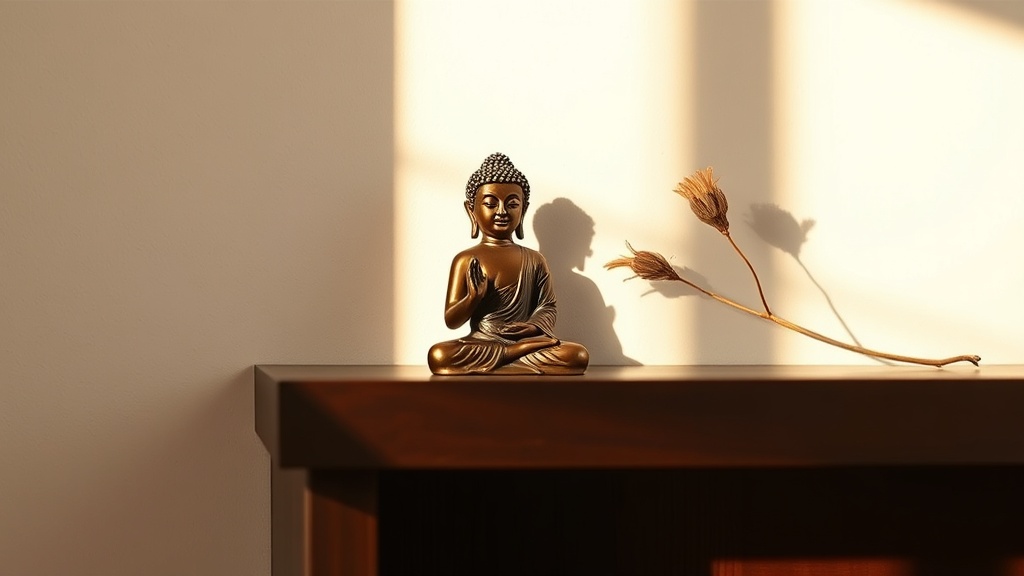
Across nearly all Buddhist cultural traditions, two rules hold consistently. First, the statue should be elevated: at minimum at eye level when seated, ideally higher. Placing it on the floor is considered disrespectful in Thai, Burmese, Tibetan, and Chinese Buddhist households alike. If you have no shelf, a small dedicated table works well.
Second, the surface beneath the statue should be clean and free of clutter. This does not mean you need a formal altar. A simple wooden shelf cleared of everyday objects, perhaps with a small cloth or mat underneath, is entirely appropriate. The clarity of the space around the statue reflects the quality of mind the image represents.
Room by Room: Where to Place Your Buddha Statue
The Living Room
The living room is the most common and most appropriate space in a home for a Buddha statue. It is a shared, active space where people gather, and having an image of the awakened mind present there is considered auspicious in both Chinese Buddhist and Feng Shui traditions. Place the statue on a shelf, mantelpiece, or console table, facing the main door if possible. This positioning is described in classical Feng Shui texts as allowing the figure to "greet" the energy entering the home.
Keep the area around the statue intentional. A small candle, a few flowers, or a stick of incense is appropriate. Avoid placing the statue next to a television, game console, or speakers. The contrast between the stillness the image represents and the noise of entertainment technology creates a visual and conceptual dissonance that most Buddhist practitioners would avoid.
The Meditation or Prayer Room
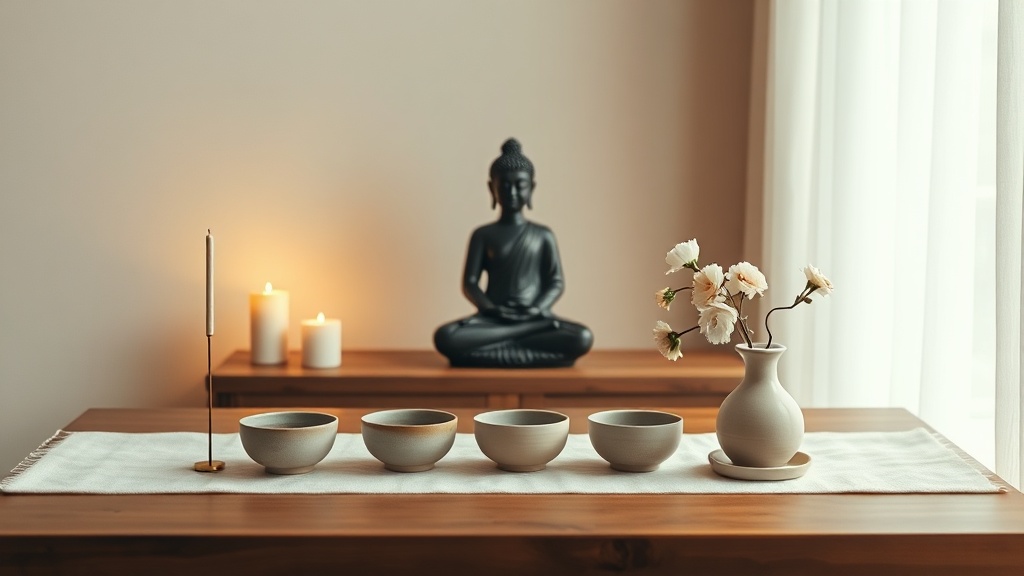
If you have a dedicated meditation space, this is the natural home for your primary statue. Here, placement follows the most traditional guidelines. The statue should be on an altar surface or elevated shelf at the far wall, facing the practitioner. You sit facing the Buddha, which in Tibetan, Chinese, and Theravada practice alike means orienting yourself toward the representation of awakening.
The altar space can include offerings: water bowls, incense, flowers, a candle or lamp. In Tibetan Vajrayana practice, seven water offering bowls arranged in a row before the statue are a daily ritual described in various liturgical texts. In Theravada practice, fresh flowers and incense are the standard offerings, consistent with monastery traditions documented since the early centuries of the Common Era.
The Home Office or Study
A statue in a home office is less traditional but not uncommon. In this context, many practitioners place a smaller figure on their desk or on a shelf above their workspace. The figure most often chosen here is the Dhyana mudra statue (hands resting in the lap in meditation posture), which evokes concentration and equanimity. It can serve as a visual anchor when work becomes stressful, not as a lucky charm, but simply as a reminder of a quality of mind worth returning to.
The Bedroom
Most Buddhist traditions advise against placing a statue in the bedroom. The reasoning varies: in Thai and Burmese practice, it is considered disrespectful for the image to be present during sleep, particularly since one is prone, with feet potentially pointing toward the statue (pointing feet at a sacred image is considered disrespectful across most of South and Southeast Asia). In Tibetan practice, the bedroom is simply considered too intimate and too mundane a space for a sacred image.
If your bedroom is also your only quiet space for practice, and you genuinely use it for meditation, a small statue on an elevated shelf dedicated solely to that purpose is acceptable. The key condition is that the statue has its own designated space and is not just sitting among personal belongings.
The Bathroom and Kitchen
Both are generally considered inappropriate for Buddha statue placement. The bathroom for obvious reasons of cleanliness and dignity. The kitchen less obviously: in Chinese Buddhist tradition, the kitchen is the domain of the Kitchen God (Zaoshen), a separate deity, and mixing sacred images is considered muddled practice. More pragmatically, kitchens involve grease, heat, and practical activity that makes maintaining a respectful space around the statue difficult.
⚠️ A Note on Outdoor Placement
Garden Buddha statues are widely available, but placing a sacred image outdoors requires particular care. If you do place a statue in a garden, choose a protected spot where it will not be rained upon, knocked over, or obscured by clutter. Many Buddhist households in Japan and across Southeast Asia have garden shrines, but these are deliberately designed spaces, not improvised. A figure left to weather and deteriorate is generally considered less respectful than no figure at all.
Understanding Mudras: The Hand Gesture Determines the Meaning
One of the most practical pieces of knowledge for anyone placing a Buddha statue is understanding what the hand gestures, or mudras, signify. The pose of the figure is not decorative variation. Each mudra carries a specific meaning rooted in the early iconographic canons of Buddhist art.
| Mudra | Posture | Traditional Meaning |
|---|---|---|
| Bhumisparsha | Right hand touching the earth | The moment of awakening under the Bodhi tree; witness and resolve |
| Dhyana | Both hands resting in lap | Meditation; stillness; inward concentration |
| Abhaya | Right hand raised, palm outward | Fearlessness; protection; cessation of fear |
| Dharmachakra | Both hands at chest, fingers touching | Turning the Wheel of Dharma; the first teaching at Sarnath |
| Varada | Hand extended downward, palm outward | Generosity; compassionate giving |
When choosing which statue to place in a specific room, this matters. A Dhyana mudra figure suits a meditation space. An Abhaya mudra figure works well near an entrance. A Bhumisparsha mudra figure, the most common in Southeast Asian Theravada iconography, is appropriate in most contexts as it commemorates the central event of the Buddhist narrative: the night of awakening.
💡 Did You Know?
The Laughing Buddha figure common in Chinese restaurants and homes is not Shakyamuni Buddha (the historical Buddha) at all. It depicts Budai, a 10th-century Chinese monk known for his generosity and good humor, who became a folk deity in Chinese popular religion. In Chan and Zen Buddhism, he is sometimes identified with Maitreya, the future Buddha. Placing a Budai figure follows different customs than placing a Shakyamuni or Amitabha statue.
Direction and Orientation: What the Traditions Say
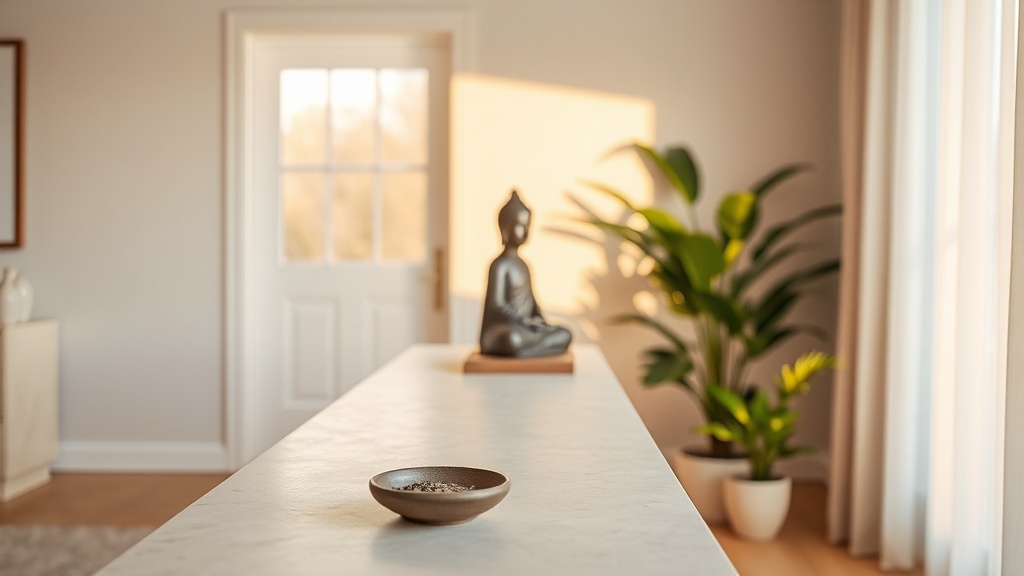
The question of which direction a Buddha statue should face comes up often, and the answer varies by tradition. In Chinese Buddhist and Feng Shui practice, the statue should ideally face the main entrance of the room or home. This is framed as allowing the figure to "receive" those entering and, symbolically, to project calm outward into the space.
In Tibetan practice, the direction of the altar is less fixed than the hierarchy of objects upon it. East-facing altars are considered auspicious in some Tibetan texts, consistent with the symbolism of the rising sun and new beginnings, but this is a preference rather than a rule. In Theravada household shrines across Thailand and Sri Lanka, the statue often simply faces the room, without strict directional requirements.
What matters more than cardinal direction in most traditions is that the figure is not placed facing a wall, facing a bathroom, or looking directly at a bed. These are the consistent negatives across traditions, and they make intuitive sense: the image should face into living space, not be oriented toward inactivity or toward spaces considered private and mundane.

🗂️ Explore the Collection
Buddhist Decor
From statues to altar objects, every piece chosen for craft quality and cultural grounding in Buddhist tradition.
57 références
Discover the Category →Setting Up a Simple Home Altar Around Your Statue
You do not need elaborate equipment to create a meaningful altar space. A cleared wooden shelf or small table, a cloth or mat in a natural color, the statue itself, and one or two simple offerings are sufficient. Across Buddhist cultures, offerings traditionally include fresh water, light (a candle or oil lamp), incense, and flowers. These correspond to the five senses and the gesture of giving what is beautiful and clean.
In Theravada practice, the Pali Canon (specifically passages in the Khuddakapatha) describes the merit associated with making offerings before images of the Buddha. The practice is understood not as transactional worship but as a cultivation of generosity, attention, and gratitude: qualities the practitioner is developing in themselves, using the statue as a focal point.
Keep offerings fresh. Wilted flowers and burned-down candles left in place for weeks create the opposite of the intended effect. The care you extend to the altar is, in practice, a form of daily mindfulness. Refreshing the offerings regularly, even if briefly, is more valuable than an elaborate setup that is then neglected.

🗂️ Explore the Collection
Zen Decor
Altar cloths, incense holders, and contemplative objects that complete a Buddha placement with quiet coherence.
206 références
Discover the Category →When You Are Not Buddhist: Placing a Statue with Respect
A significant number of people drawn to Buddha statues do not identify as Buddhist practitioners. They may be drawn to the aesthetic, to the sense of calm the image conveys, or to a personal connection with contemplative practice outside of any religious framework. There is nothing inherently wrong with this, and most Buddhist teachers are pragmatic rather than proprietary about sacred images.
The same basic principles apply regardless of whether you are a dedicated practitioner or simply someone who finds meaning in the image. Elevation, cleanliness, and a considered placement are acts of respect that stand on their own terms. What changes for the non-practitioner is the absence of a formal practice context, not the validity of care.
Where the line tends to be drawn, across most Buddhist cultural communities, is in the use of sacred images in ways that are clearly trivializing: as novelty items, as bathroom accessories, or stacked in a shop window among unrelated decorative goods. The image of the Buddha carries centuries of meaning for hundreds of millions of people. Awareness of that, wherever you stand personally, is the starting point for good placement.
"One who sees the Dhamma sees me; one who sees me sees the Dhamma."
Attributed to the Buddha in the Vakkali Sutta, Samyutta Nikaya, the teaching that the image points beyond itself, toward practice.
Five Practical Checks Before You Finalize Your Placement
- Height: Is the statue at or above seated eye level? If you will sit in front of it during practice, you should be looking up, not down.
- Direction: Does the figure face into the room and ideally toward the main entry point? Avoid face-to-wall placement.
- Surface cleanliness: Is the surface free of unrelated objects (keys, chargers, books, magazines)? A dedicated surface, even a small one, is better than a crowded shelf.
- Room suitability: Is this a space where the image will be treated with consistent attention? Living rooms, meditation rooms, and studies are generally appropriate. Bathrooms and kitchens are not.
- Mudra relevance: Does the hand gesture of your statue match how you intend to use the space? There is no strict rule, but alignment between meaning and context makes the placement more coherent.
Questions About Buddha Statue Placement
Which direction should a Buddha statue face?+
In Chinese Buddhist and Feng Shui practice, the statue is typically oriented to face the main entrance of the room or home. In Tibetan practice, an east-facing altar is considered auspicious but not required. The consistent guidance across traditions is that the statue should face into the living space, not toward a wall, bed, or bathroom.
Can I place a Buddha statue in my bedroom?+
Most Buddhist traditions advise against it. The bedroom is considered too intimate and too passive a space, and there is a practical concern about feet pointing toward a sacred image during sleep, which is considered disrespectful in South and Southeast Asian traditions. If your bedroom is your only quiet practice space, a small, elevated, dedicated altar shelf is acceptable.
Does it matter what material my Buddha statue is made from?+
Material affects durability, weight, and aesthetic but does not determine the spiritual validity of the image in most traditions. Traditionally, statues were cast in bronze or carved in stone, wood, or jade. Modern statues in resin, cold-cast stone, or ceramic are widely used in home settings. What matters more than material is the quality of craft, the accuracy of the iconography, and the care with which the piece is placed.
Is it disrespectful to display a Buddha statue if I'm not Buddhist?+
Buddhist teachers generally take a practical view. What matters is that the image is treated with the basic respect its cultural and historical significance deserves: placed with intention, kept clean, and not used in trivializing contexts. Personal religious identity is less relevant than the quality of attention you bring to the placement.
Can I place more than one Buddha statue in my home?+
Yes. Many Buddhist households have multiple images representing different aspects of the teaching: a Shakyamuni figure on the altar, a smaller Amitabha or Medicine Buddha in another room, a Kuan Yin in a separate corner. The principle remains the same for each: elevation, cleanliness, and a considered placement. Avoid clustering multiple figures together in a way that feels casual or decorative rather than intentional.


