

Pi Xiu: The Chinese Mythical Guardian and Its Place in Buddhist and Taoist Traditions
Few figures in Chinese mythology have endured as long, or appeared as widely, as the pi xiu. Carved in jade, cast in bronze, perched above temple gates or displayed in shop windows, this chimeric creature occupies a peculiar crossroads between folk religion, Taoist cosmology, and the broader landscape of East Asian spiritual art. Yet for many people outside the Chinese-speaking world, it remains poorly understood, reduced to a lucky charm category without much depth behind it.
The reality is more layered. The pi xiu (貔貅, also romanized as pixiu or pi yao) belongs to a rich tradition of auspicious beasts whose symbolic roles were codified over centuries in Chinese classical literature, court ritual, and popular religion. Understanding what it actually represents, and what it does not, is the first step to engaging with it honestly.
⭐ Key points
- Pi xiu is a mythological creature from Chinese tradition, not a Buddhist deity, though it appears in contexts influenced by both Taoism and Chinese Buddhism.
- Classical texts describe it as a protector that wards off harmful energies and accumulates material blessings.
- There are two distinct forms: tiān lù (one-horned, associated with wealth) and bì xiè (two-horned, associated with protection).
- Representations vary widely: jade, metal, resin, carved stone, each with different historical and regional associations.
- Cultural meaning belongs to the tradition; no object carries inherent metaphysical power.
Origins: A Beast From the Classical Chinese Bestiary
The earliest textual references to the pi xiu appear in Han dynasty sources, roughly two thousand years ago. The creature is described as a fierce, lion-like animal with dragon characteristics, sometimes depicted with wings, sometimes without, belonging to a class of beings known as ruì shòu (瑞獸), or auspicious beasts. These were not gods in the theological sense, but symbolic animals whose presence, whether in art or in ritual, was understood to attract positive forces and repel harmful ones.
The Han court placed stone pi xiu figures at tomb entrances, a practice that fused apotropaic function (warding off malevolent spirits) with the idea of guarding accumulated wealth into the afterlife. This double role, protector and accumulator, became the creature's defining trait across subsequent dynasties.
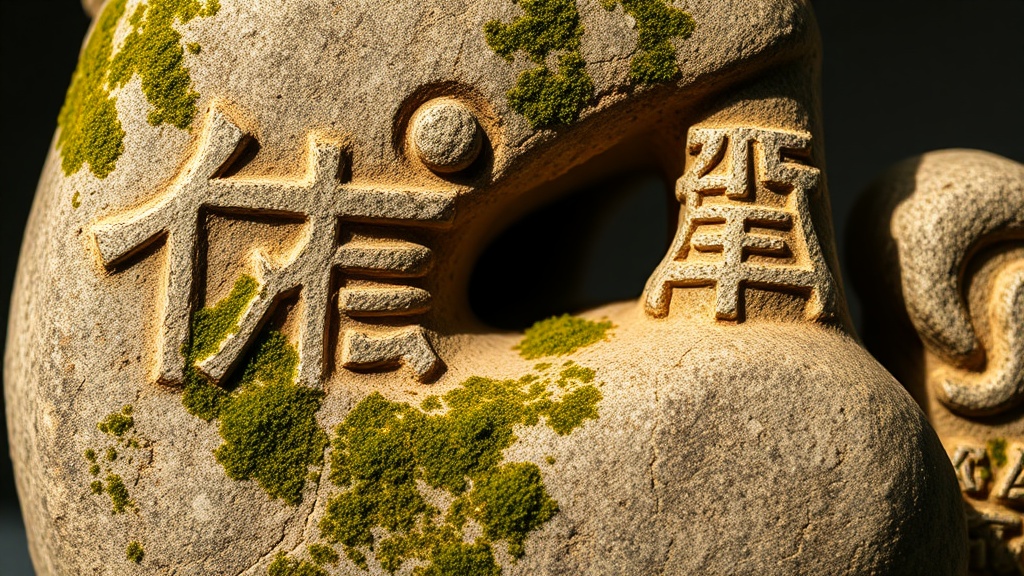
In the Tang and Song periods, pi xiu imagery became more standardized. The creature settled into a recognizable form: a stocky, powerful body covered in scales or fur, a large leonine head with a single or double horn, clawed feet, and often a short tail. Wings appear in many versions, linking it visually to celestial beasts rather than earthly animals. The mouth is depicted open, symbolic of taking in, while the anatomy conspicuously lacks a visible digestive exit, a detail that Chinese folk tradition interpreted as meaning what enters does not leave.
💡 Did you know?
The Han dynasty emperor Wu is said to have kept stone pi xiu at the gates of his palace as guardians of the imperial treasury. This association with state wealth, not personal luck, is where the creature's reputation for attracting abundance originates. The folk interpretation of "personal fortune" developed much later, during the Ming and Qing dynasties, as the figure moved from imperial courts into popular religion.
The Two Forms: Tiān Lù and Bì Xiè
Classical Chinese sources distinguish between two variants of the pi xiu, sometimes treated as a male-female pair, sometimes as separate creatures with distinct functions.
The tiān lù (天祿), typically depicted with a single horn, is associated with the accumulation of wealth and the opening of fortunate circumstances. The bì xiè (辟邪), with two horns, takes on a more protective role, specifically the dispelling of inauspicious forces and harmful energies. In practice, most popular representations conflate these two into a single "pi xiu" figure, and pairs of statues, one of each type, are commonly placed symmetrically at entrances, a tradition still visible in contemporary Chinese homes and businesses.
| Feature | Tiān Lù (天祿) | Bì Xiè (辟邪) |
|---|---|---|
| Horns | One | Two |
| Primary role | Accumulation of wealth and good fortune | Protection, dispelling of harmful forces |
| Gender in folk tradition | Often considered male | Often considered female |
| Placement tradition | Right side of entrance (from inside looking out) | Left side of entrance (from inside looking out) |
| Common materials | Jade, yellow metal, gold-toned resin | Obsidian, dark stone, black resin |
Pi Xiu in the Context of Chinese Buddhism
The pi xiu is not a Buddhist figure in the canonical sense. It does not appear in the Pali Canon, in the Mahayana sutras, or in the iconographic manuals of Vajrayana Buddhism. Its roots are in Chinese cosmological and folk religion, heavily shaped by Taoist thought and Han dynasty court ritual.
That said, the boundaries between Buddhism and Chinese folk religion have never been sharp. As Buddhism spread through China from roughly the first century CE onward, it absorbed and coexisted with pre-existing traditions. Many Chinese Buddhist temples incorporate auspicious beast imagery, including the pi xiu, in their architectural decoration, particularly in regions where Chan (Zen) Buddhism developed alongside strong folk traditions. The creature's role in these contexts is decorative and apotropaic, not doctrinal.
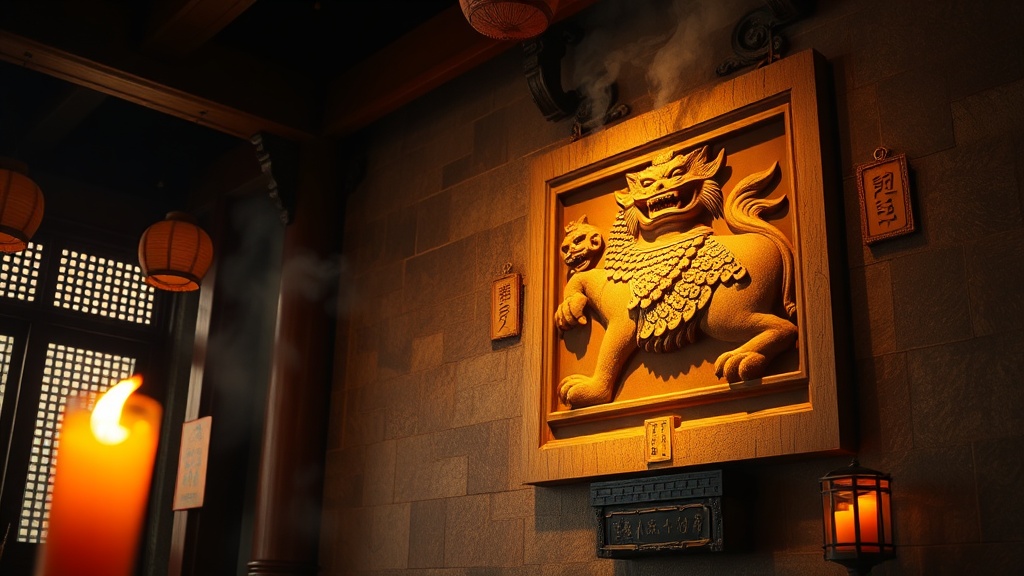
A useful comparison is the dragon (lóng), which similarly has no direct Buddhist doctrinal role but appears extensively in Chinese Buddhist temple art as a guardian figure and symbol of spiritual authority. In both cases, the tradition being drawn on is Chinese cosmological thought rather than the imported Indian framework of the Dharma.
Materials, Craftsmanship, and What to Look For
Pi xiu figures are produced in an enormous range of materials, each carrying its own historical and symbolic associations.
Jade (nephrite and jadeite) is the most historically prestigious material. Carved jade pi xiu have been excavated from Han dynasty tombs and command significant value in the antique market. Contemporary jade pieces range from high-quality hand-carved nephrite to mass-produced dyed stone sold as jade, quality varies enormously, and buyers should be cautious.
Obsidian became the dominant material in popular pi xiu figures during the 20th century, particularly in Taiwan, Hong Kong, and mainland China. In the folk tradition, obsidian's dark, glassy surface is associated with absorbing and neutralizing negative energies. Most affordable pi xiu pieces sold internationally today are cast or tumbled obsidian.
Bronze and brass have a long history in Chinese ritual objects. A well-cast bronze pi xiu with a patinated surface is closer in character to classical court sculpture than the polished gemstone pieces popular today. These are worth looking at for their craft value as much as their symbolic one.
Resin and composite materials account for the majority of mass-market pieces. The better manufacturers use hand-finishing and period-accurate proportions; the less careful produce generic figurines with little connection to the iconographic tradition. When buying, pay attention to the quality of the face and the articulation of the scales or fur, these are where skilled craftsmanship shows.

🗂️ Explore the collection
Dragon statues
East Asian guardian beasts in the same cosmological lineage as the pi xiu, each piece chosen for material quality and iconographic accuracy.
8 références
Discover the category →Placement and Traditional Conventions
Classical feng shui literature, itself a Taoist-rooted discipline, provides the most detailed guidance on placing pi xiu figures, though practitioners vary considerably in their interpretations. A few conventions appear consistently across regional traditions.
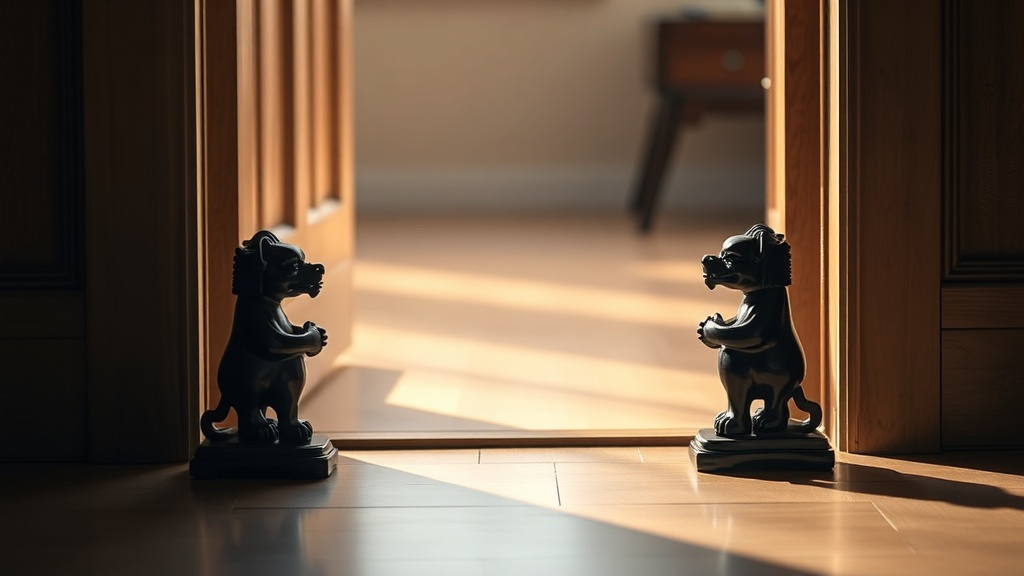
- Paired placement: Two figures are placed symmetrically at an entrance, one tiān lù and one bì xiè, facing outward. This mirrors the practice of placing guardian lions (shī zi) at gates, and serves the same protective function.
- Orientation: The pi xiu should face a window or door, looking outward rather than inward, so its gaze is directed at what comes in from outside.
- Height: Classical texts suggest the figure should not be placed on the floor, but at eye level or above, a gesture of respect consistent with how ritual objects are treated generally in Chinese religious practice.
- Avoiding the bedroom: Many practitioners advise against placing pi xiu in sleeping spaces, as its fierce, vigilant energy is considered more suited to active spaces. This is a folk convention, not a universal rule.
Pi Xiu in Contemporary Practice and Global Circulation
Over the past few decades, the pi xiu has moved well beyond its original Chinese cultural context. Obsidian pi xiu bracelets are now sold across Southeast Asia, in Western metaphysical shops, and on global e-commerce platforms. Jade and crystal versions are marketed to non-Chinese audiences primarily through feng shui and "crystal healing" frameworks.
This global circulation has produced a wide spectrum of representations, from carefully crafted pieces rooted in the iconographic tradition to generic figurines with little scholarly or artisanal grounding. It has also produced a layer of commercial folklore: claims about specific stones "activating" the creature's power, rituals for "awakening" a pi xiu, and prescriptions for what the owner should feed or touch. Some of these practices draw on genuine regional folk customs; many are recent inventions adapted for a new market.
For someone approaching the pi xiu honestly, the most useful frame is probably the one used by Chinese art historians: it is a sophisticated example of apotropaic and auspicious iconography with a two-thousand-year material history. Whether one engages with it as a devotional object, a decorative piece, or a cultural artifact, that history is worth knowing.
⚠️ A note on attributed qualities
The qualities attributed to stones and figures, obsidian pi xiu "absorbing negative energy," jade "promoting harmony", belong to spiritual traditions and cultural beliefs. No therapeutic or metaphysical effect is scientifically recognized. These objects are not substitutes for medical advice or treatment. Engage with them as meaningful cultural artifacts, and let that meaning be grounded in the tradition they come from rather than in marketing claims.
Recognizing a Well-Made Pi Xiu: A Buyer's Checklist
Whether you are looking at a carved stone piece, a cast bronze figure, or a hand-finished resin sculpture, the following points distinguish a thoughtfully made pi xiu from a generic copy.
- Proportion: The body should be stocky and powerful, with a large, expressive head. Figures where the head looks too small or the body too elongated are departures from the classical form.
- Horn count: Verify whether the piece is a tiān lù (one horn) or bì xiè (two horns). A reputable seller will know this distinction and describe the piece accordingly.
- Surface detail: Look for articulated scales, clearly defined claws, and a well-carved mane. In jade pieces, check the translucency and grain consistency, low-quality dyed stone is often opaque with an unnaturally uniform color.
- Origin information: For pieces sold as antique or semi-antique, provenance documentation matters. For contemporary craft pieces, knowing the workshop or artisan region (Hetian for nephrite jade, Fujian for many resin figures, for example) adds context.
- Mouth and posture: The mouth should be open, and the posture dynamic, the creature is typically shown in motion or alert, not passive.

🗂️ Explore the collection
Buddha Statues
Carefully selected statues in resin, ceramic, and sandstone, each documented for material, origin, and iconographic tradition, just as a well-chosen guardian figure deserves to be.
48 références
Discover the category →"The auspicious beast does not bring fortune to the passive. It guards the threshold for those who have already chosen to act."
Traditional saying, origin attributed to Ming dynasty merchant culture
Living With a Pi Xiu: What the Tradition Actually Asks
Stripped of commercial mythology, the traditional relationship with a pi xiu is straightforward. The figure marks a threshold, literal or symbolic, and its presence is a reminder that accumulation and protection are not passive states. In the Taoist framework that underpins most pi xiu practice, the creature's energy must be matched by the household's own diligence and moral conduct.
In this sense, the pi xiu shares something with the guardian figures found at the entrances of Buddhist temples: the dharmapala, the Nio (仁王) of Japanese tradition, the four Heavenly Kings of Chinese Buddhist iconography. These beings are not intercessors in the theological sense. They mark a transition, signal seriousness of intention, and remind those who cross the threshold that they are entering a space held to a particular standard.
A pi xiu placed thoughtfully in a home or practice space functions similarly. Its value is not in the material it is made from or in any effect it produces independently. It is in what the placement represents: an intention, consciously formed, about how a space is held and what it is for. That is a modest but real function, and one the two-thousand-year tradition of these figures has always pointed toward.
Frequently asked questions about pi xiu
Is the pi xiu a Buddhist symbol?+
The pi xiu is not a Buddhist figure in the canonical sense. It originates in Chinese Taoist cosmology and Han dynasty court culture. It appears in some Chinese Buddhist temple contexts as a decorative guardian element, but it has no doctrinal status in Theravada, Mahayana, or Vajrayana Buddhism.
What is the difference between pi xiu and pi yao?+
Pi yao (貔貅 written the same way) is simply an alternate romanization used primarily in Southeast Asian and some Cantonese-influenced contexts, particularly in feng shui literature. The figure is the same; the difference is regional pronunciation and transliteration convention, not a distinct creature.
Which material is best for a pi xiu statue?+
Historically, jade (nephrite) is the most prestigious material, with a documented lineage going back to the Han dynasty. Bronze and brass have a strong classical pedigree. Obsidian became popular in 20th-century folk practice. For contemporary buyers, the choice of material is largely one of personal preference and budget; quality of craftsmanship matters more than the specific stone or metal.
Where should I place a pi xiu at home?+
Classical feng shui literature suggests placing a pi xiu near the entrance of a home or business, facing outward toward a window or door, and at eye level or above rather than on the floor. Paired placement, one tiān lù and one bì xiè, is the traditional form. Avoiding the bedroom is a common folk convention. These are traditional guidelines, not universal requirements.
Does a pi xiu need to be "activated" before use?+
Some regional folk traditions include a simple cleansing gesture, rinsing the figure with clean water and allowing it to dry, before placing it in a new space. More elaborate "activation" rituals are largely contemporary innovations without classical textual grounding. A thoughtful, intentional placement is more in keeping with the tradition than commercially marketed ritual packages.


