

The Three-Legged Toad: Symbol, Story, and Place in Feng Shui Tradition
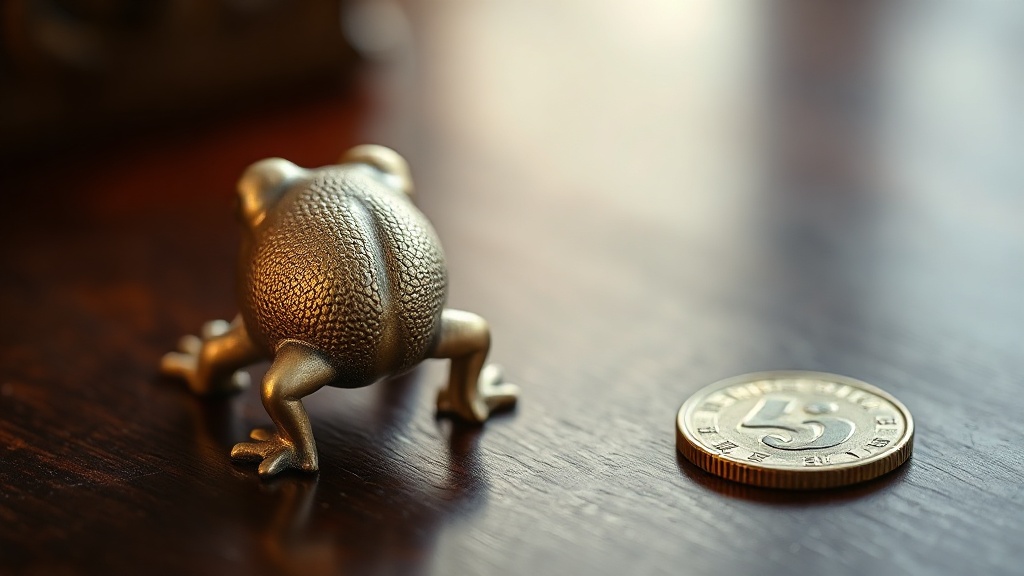
Walk into any Chinese gift shop, herbal medicine market, or feng shui supplier and you will almost certainly find it: a squat, wide-mouthed toad sitting on a pile of coins, one leg missing, often holding a coin in its mouth. The three-legged toad, known in Chinese as Chan Chu (蟾蜍), is one of the most widely recognized symbols in Chinese cosmological tradition. It shows up on office desks in Shanghai, restaurant counters in San Francisco, and home altars from Taipei to London. Yet most people who display one know surprisingly little about where the figure actually comes from, what it symbolizes, and why the placement matters so much according to classical feng shui principles.
This is a figure with genuine depth, mythological roots stretching back over two thousand years, a distinct role in Taoist cosmology, and a precise set of conventions governing how and where it should be placed. Understanding those layers does not require advanced practice. It just requires slowing down long enough to look carefully at what you are actually holding.
⭐ À retenir
- The three-legged toad is called Chan Chu in Chinese and belongs to Taoist cosmological tradition, not Buddhist doctrine.
- Its missing fourth leg connects to a specific lunar myth about the moon and immortality.
- Classical feng shui gives precise instructions for its placement, direction, height, and coin orientation all matter.
- It is one of the few feng shui symbols associated with both the water element and the metal element simultaneously.
- The figure is widely used as a decorative and symbolic object; no scientific effect on wealth or fortune has been established.
Origins: The Myth Behind the Missing Leg
The Chan Chu's backstory is rooted in classical Chinese mythology, specifically in the story of Chang'e (嫦娥), the moon goddess. According to the most widely cited version of the myth, Chang'e's husband Hou Yi was a divine archer who shot down nine of ten suns to save the earth from scorching. As a reward, he received the elixir of immortality. Chang'e, accounts vary on her motivations, drank the elixir herself and ascended to the moon, where she was transformed into a toad.
This lunar toad came to be associated with the moon's cycles, with transformation, and with abundance. The creature eventually evolved in folk tradition into the Chan Chu: a three-legged toad sitting on coins, connected to the circulation of material resources. The missing fourth leg is sometimes explained as a mark of its supernatural nature, three legs being a marker of divine or otherworldly beings in Chinese cosmology, and sometimes as a remnant of its transformation from the four-limbed Chang'e.

💡 Did you know?
The Chinese character for toad, 蟾 (chán), also appears in the classical term for the moon itself: chán gōng (蟾宫), literally "toad palace." For centuries, the moon and the toad were linguistically and symbolically inseparable in Chinese literary culture.
Chan Chu in Taoist and Folk Tradition
The three-legged toad sits at an interesting crossroads between formal Taoist cosmology and popular folk religion. In Taoist thought, the toad is connected to yin energy, water, and the moon, all yin-associated forces in the classical five-element system. Water, in Taoist cosmology, governs flow, adaptability, and the movement of resources. This is why the Chan Chu became attached to ideas of material circulation rather than, say, spiritual attainment or longevity (which are typically associated with other symbols like the crane or the pine tree).
In popular folk religion, the figure took on a more practical character. The Liu Hai legend, another major source for the Chan Chu's iconography, tells of a Taoist immortal named Liu Hai who befriended a three-legged toad by luring it with a string of coins. This story reinforced the toad's association with coins, circulation, and the flow of material abundance. Many Chan Chu figurines today depict the toad with a single coin in its mouth, directly referencing this tradition.
It is worth being clear about what this symbolism means and what it does not. In classical Chinese tradition, the Chan Chu represents the idea of resources in motion, water flowing, not stagnating. It is a visual reminder of a cosmological principle. The attribution of literal fortune-bringing properties to the object belongs to popular belief; no such effect has been scientifically established. The value of the figure lies in its cultural and symbolic content, not in any physical or metaphysical mechanism.
Reading the Figure: What to Look For
Not all three-legged toad figurines are identical. The details carry meaning within the tradition, and knowing them helps you make a more considered choice when selecting one for display.
- The coin in the mouth: Most Chan Chu are depicted holding a Chinese coin (round with a square hole) in their mouth. The square hole references the classical Chinese cosmological pairing of round heaven and square earth. The coin should ideally face inward when the toad is displayed, pointing toward the center of the room or the building, symbolizing resources coming in rather than going out.
- The pile of coins underfoot: Many figurines show the toad sitting on a bed of coins or ingots. This is a standard iconographic element representing the accumulation of material resources over time.
- The number of coins on the back: Some versions show the Big Dipper constellation or a pattern of seven stars on the toad's back, a Taoist cosmological reference connecting the figure to celestial ordering.
- Material: Chan Chu figures are made in resin, brass, jade, and ceramic. Brass and bronze versions are considered more traditional and are connected to the metal element in five-element theory. Jade versions carry associations with longevity and protection. Resin versions are the most affordable and widely available.
Feng Shui Placement: The Rules That Actually Matter
Classical feng shui texts and contemporary practitioners generally agree on a core set of placement guidelines for the three-legged toad. These are not arbitrary, they follow from the figure's symbolic logic within the broader system.
Where to Place It
The Chan Chu is traditionally placed near the entrance of a home or business, but not directly at the front door. The preferred position is diagonally opposite the main entrance, the so-called "wealth corner", or near the entrance of a room used for work or commerce. The logic is that the toad should appear to be entering the space, bringing the symbolism of resources flowing in.
Some practitioners place the Chan Chu in the southeast sector of a home, which corresponds to the "wealth" gua in the classical bagua (eight-trigram) map. Others follow the compass school of feng shui and calculate placement based on the specific facing direction of the building. Both approaches have textual grounding; the choice between them depends on which school of feng shui you are working with.
Height and Orientation
The figurine should not be placed on the floor, in Chinese symbolic thinking, placing auspicious objects at floor level is considered inauspicious, associating them with dirt and neglect. A low shelf, a console table, or a desk surface are all appropriate. The toad should face inward, toward the center of the room, not toward a wall or a window.
Where Not to Place It
- Not in bathrooms or kitchens, areas associated with waste and fire, respectively, are considered poor environments for a water-element symbol.
- Not facing the front door directly, the figure should appear to be coming in, not going out.
- Not at eye level or above eye level, the traditional placement keeps the figure at a level below the eye line, a mark of humility in Chinese decorative convention.
- Not in a bedroom, the Chan Chu carries active, yang-tilting energy that is considered disruptive to rest, despite the figure being a yin symbol in origin.
| Placement Factor | Recommended | Avoid |
|---|---|---|
| Room | Entrance hall, living room, office, shop | Bathroom, kitchen, bedroom |
| Height | Low shelf, desk, console (below eye level) | Floor level, above eye level |
| Orientation | Facing inward, coin pointing toward room center | Facing front door directly, facing a wall |
| Sector (bagua) | Southeast (wealth gua) or near main entrance | Southwest (relationship gua), center of home |
| Material | Brass, bronze, jade, quality ceramic | Broken, chipped, or damaged figures (replace promptly) |
The Three-Legged Toad Among Other Feng Shui Symbols
The Chan Chu is one figure in a much larger visual vocabulary of Chinese cosmological symbolism. Understanding where it sits within that system gives it more context and prevents the common mistake of treating every Chinese decorative animal as interchangeable.
The turtle (gui, 龜) governs longevity, stability, and the north, a fundamentally different symbolic register from the toad's lunar, water-and-metal associations. The dragon (long, 龍) is connected to power, authority, and the east, typically displayed at higher positions in a space. The fish (especially the carp) is associated with perseverance and transformation, referencing the myth of the carp becoming a dragon by leaping the Yellow River falls.
The three-legged toad specifically occupies the niche of material flow, the movement of resources, the circulation of what sustains daily life. This is why it is so common in commercial spaces. It is not a protection symbol, not a longevity symbol, and not a symbol of wisdom or scholarly achievement. Knowing what a symbol is not for is just as important as knowing what it is for.

🗂️ Voir la collection
Feng Shui Decor
Figurines, statues, and symbolic objects rooted in classical Chinese cosmological tradition, the natural home for a three-legged toad and its companions.
81 références
Découvrir la catégorie →Caring for a Chan Chu Figurine Over Time
In Chinese folk practice, the Chan Chu is treated as an active participant in the household rather than a passive decorative object. This translates into a few practical habits that have been passed down across generations.
The figure is typically cleaned regularly, dust and neglect are considered symbolically contrary to what the figure represents. Brass and bronze versions can be polished gently with a dry cloth; avoid water on porous materials like unglazed ceramic. If the coin in the mouth becomes loose or falls out, it should be replaced or secured, a toad with no coin is considered an incomplete figure in the tradition.
Some practitioners follow the habit of "activating" the Chan Chu each morning by briefly turning it to face outward (toward the entrance), then turning it back inward at the end of the day. This is a folk practice rather than a classical feng shui prescription, but it reflects the broader idea that symbolic objects benefit from conscious engagement rather than passive display. Whether you adopt that practice or not is entirely a matter of personal approach.
If a Chan Chu figurine breaks, particularly if it loses its third leg, which is already the defining mark of the figure, traditional guidance suggests replacing it rather than continuing to display a damaged piece. A cracked or broken symbolic object is generally considered inauspicious in Chinese decorative tradition, regardless of the specific figure involved.
"The toad that lives in the moon blesses those who move like water, neither grasping nor still."
Popular saying from Chinese folk tradition, origin uncertain
Choosing a Three-Legged Toad: What Actually Matters
The market for Chan Chu figurines ranges from mass-produced plastic pieces to hand-cast brass or hand-carved jade. There is no single correct material, but a few principles from the tradition can guide a more considered choice.
Brass and bronze are the most classically grounded materials for this figure, aligning with the metal element and giving the piece physical weight that feels appropriate for an object with symbolic content. Jade, whether genuine nephrite or jadeite, carries its own layered symbolism in Chinese culture and is considered an appropriate material for objects of significance. Resin pieces can be well-crafted and are far more accessible in price; the key is craftsmanship: clear detail in the coin, the eyes, the textured skin, and a stable base.
Size is a matter of space and proportion. A Chan Chu on an office desk can be small, palm-sized, while one placed in an entrance hall might be larger. The tradition does not prescribe specific dimensions, but the figure should be proportional to its surface and should not appear hidden or crammed.
Color varies: the most traditional versions are gold-toned (brass or gold-painted resin), but green (referencing the toad's natural coloring and the wood element) and dark bronze are both well-established in the tradition. Avoid purely decorative interpretations that strip away the iconographic details, a toad without coins, without the three-legged form, or depicted in an entirely naturalistic style loses the symbolic content that makes it a Chan Chu rather than simply a toad figurine.

🗂️ Voir la collection
Feng Shui
From coins and water fountains to symbolic figurines, the broader feng shui collection for those building a considered, intentional space.
23 références
Découvrir la catégorie →Questions fréquentes
Why does the three-legged toad only have three legs?+
The missing fourth leg connects to the Chinese moon myth of Chang'e, who was transformed into a toad upon ascending to the moon. Three legs also mark supernatural beings in classical Chinese cosmology, the three-legged crow of the sun, for instance, is another example. The three-legged form is not a defect but the defining feature that signals the figure's mythological identity.
Which direction should the three-legged toad face?+
Classical feng shui guidance places the Chan Chu facing inward, toward the center of the room or the interior of the home, not directly facing the front door or a window. The coin in its mouth should point toward the room, symbolizing resources flowing in. Some practitioners turn it briefly toward the entrance in the morning and back inward in the evening, a folk practice rather than a formal prescription.
Is the three-legged toad a Buddhist symbol?+
No. The Chan Chu belongs to Taoist cosmology and Chinese folk religion, not to Buddhist doctrine or practice. It is often sold alongside Buddhist objects, statues, malas, incense, because these traditions share overlapping cultural spaces in Chinese-influenced societies, but the toad has no canonical place in Buddhist teaching. It is a feng shui and folk tradition symbol.
What should I do if my Chan Chu figurine breaks?+
Traditional Chinese folk practice recommends replacing a broken or chipped symbolic object rather than continuing to display it. A damaged figure is generally considered inauspicious. If only the coin in the mouth has fallen out, it can often be repositioned or replaced; a figure with a cracked body or a broken leg is generally retired respectfully and replaced.
Can I place the three-legged toad in a bedroom?+
Most feng shui practitioners advise against placing the Chan Chu in a bedroom. Despite its yin mythological origins (the moon, the lunar goddess), the figure carries an active, commerce-associated energy that is considered disruptive to rest. Preferred locations are entrance halls, living rooms, offices, and commercial spaces.


