

Black Tourmaline: Meaning, Properties, and How to Use It
Black tourmaline is one of the most widely recognized protective stones in both Eastern and Western spiritual traditions. Jet-black, opaque, and striated with fine vertical grooves, it carries a distinctive visual weight that matches its reputation. Before we get into symbolism, it helps to know what you are actually holding: a boron silicate mineral from the tourmaline group, typically schorl, which accounts for the vast majority of black tourmaline found on the market. It forms in igneous and metamorphic rock and is mined primarily in Brazil, Sri Lanka, Afghanistan, and parts of Africa.
Its use as a protective talisman predates modern crystal culture by centuries. In medieval Europe, it was called "schörl" by miners who found it alongside tin ore in Saxony. In Tibetan practice, dark protective stones have long been incorporated into ritual objects and worn as amulets. The specific attribution of energetic shielding to black tourmaline is largely a Western esoteric development of the 19th and 20th centuries, though the stone's visual gravity makes it easy to understand why protective symbolism attached to it so persistently.
⭐ Key takeaways
- Black tourmaline (schorl) is a naturally occurring boron silicate mineral, not a manufactured or treated stone.
- Its protective symbolism appears across multiple traditions, from Tibetan amulets to 19th-century European occultism.
- It is commonly worn as jewelry, placed near entryways, or used as a grounding anchor during seated meditation.
- Qualities attributed to it belong to spiritual tradition and belief, not clinical research.
- Pairing it with other stones or ritual objects is a matter of personal practice, not a fixed rule.
What Black Tourmaline Actually Looks Like
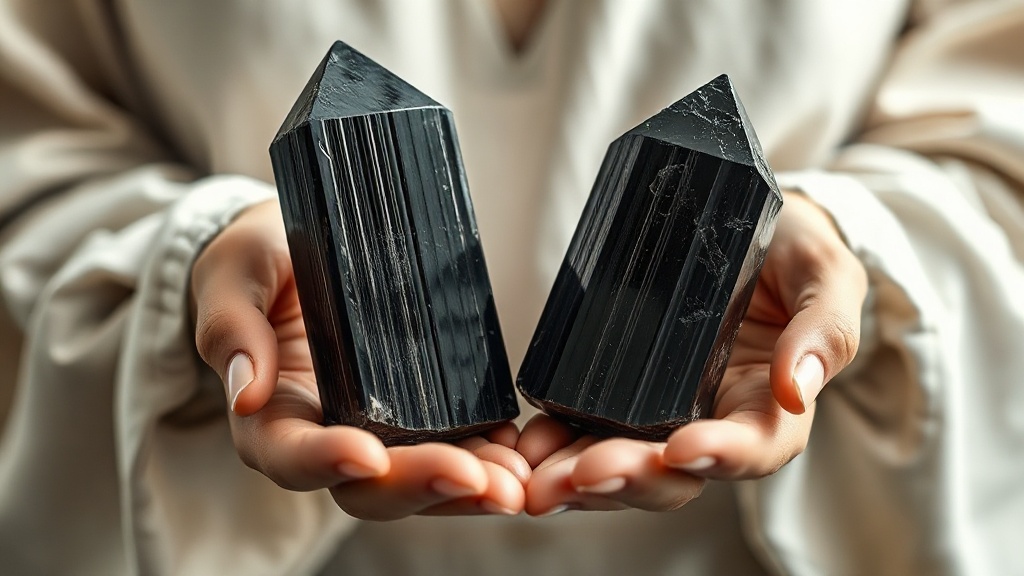
Raw specimens show long prismatic crystals with rounded triangular cross-sections and deep vertical striations running the length of the stone. The color sits at true black, occasionally with a faint brownish tint in thinner pieces held up to light. Polished tumblestones smooth out the ridges but keep the opaque, light-absorbing quality that makes the stone visually distinctive.
Tumbled black tourmaline is affordable and widely available. Larger raw clusters exist, some reaching several kilograms, and these are often sold for home placement. When buying, look for consistent color without streaks of gray or white, which may indicate quartz inclusions (not a quality flaw, just a different formation). Fully black, dense pieces are considered the purest form for both aesthetic and symbolic purposes.
💡 Did you know?
Black tourmaline has a measurable piezoelectric property: applying pressure to the crystal generates a small electrical charge. This physical characteristic, documented in materials science since the 19th century, likely contributed to its reputation for interacting with energy fields, though the metaphysical extrapolation is a matter of belief, not physics.
Black Tourmaline in Spiritual Traditions
The stone's reputation as a protective mineral crosses several traditions without belonging exclusively to any one of them. In the Western esoteric lineage running from Heinrich Cornelius Agrippa through the 19th-century Theosophical movement, black tourmaline was categorized as a grounding stone, one that anchors subtle energies to the physical body. Rudolf Steiner referenced tourmaline in his anthroposophical writings. These are historical references, not scientific endorsements.
In Tibetan Buddhism, dark stones have carried apotropaic (warding) functions for a long time. Jet, onyx, and black tourmaline all appear in protective amulets worn by monks and laypeople alike. The protective function aligns naturally with the Buddhist concept of dharmapalas, guardian figures whose role is to defend practitioners and the teachings from obstacles and harmful influences. According to Tibetan Buddhist belief, the stone itself is not a dharmapala, but wearing it as an amulet is understood within the tradition as a supportive physical anchor for that protective intention.
In Hindu tantric traditions, black gemstones are sometimes associated with Saturn (Shani) and used in rituals intended to manage that planet's demanding energy. This connects to a broader South and East Asian system in which specific stones correspond to celestial bodies and carry their influences into daily life.

🗂️ See the collection
Gemstone Bracelets
Natural stone bracelets rooted in Buddhist and Eastern tradition, for those who want to carry their practice on the wrist.
64 references
Browse the category →Symbolic Meanings Attributed to Black Tourmaline
Within contemporary stone traditions, black tourmaline is consistently described as a stone of protection, grounding, and energetic boundary-setting. These attributions follow a coherent internal logic, even if they belong to the realm of belief rather than measurement. Here is how practitioners typically frame them:
- Protection: In the Tibetan tradition, this concept is expressed through the language of obstacle removal. Practitioners describe the stone as creating an energetic shield around the wearer, according to belief, deflecting negative intentions and dispersing low-frequency influences before they reach the subtle body.
- Grounding: Its heaviness, density, and deep black color are associated with earth energy, the root, and physical presence. Practitioners use it to anchor scattered mental states during meditation or after intense spiritual work.
- Purification: Some traditions describe black tourmaline as absorbing negative energy from its environment, which is why regular cleansing (see below) is recommended by practitioners.
- EMF shielding: A widespread contemporary claim holds that black tourmaline blocks electromagnetic radiation from devices. No scientific study supports this. It belongs strictly to the belief layer of its use.
⚠️ Important note
The qualities attributed to black tourmaline belong to spiritual traditions and beliefs. No therapeutic effect is scientifically recognized. This stone is not a substitute for medical advice, psychological support, or any form of treatment. If you are dealing with a health concern, consult a qualified professional.
How Practitioners Use Black Tourmaline in Daily Life
The range of applications is broad, and most practitioners settle on one or two methods that fit their lifestyle and the physical form of the stone they have.
Wearing it as jewelry
Bracelets, pendants, and rings set with black tourmaline are among the most common forms. A bracelet worn on the left wrist is often recommended in stone traditions, based on the belief that the left side receives energy while the right side projects it. This is a symbolic convention with roots in Chinese and Indian subtle-body frameworks, not an anatomical fact. Wearing the stone keeps it in contact with the skin throughout the day and functions as a constant visual reminder of one's intention.
Placing it near entryways
A piece of raw black tourmaline placed just inside a front door, on a windowsill, or at the corners of a room is a common feng shui and energy-work practice. The logic is that protective stones at the threshold of a space intercept disruptive energies before they enter. Whether you hold this literally or treat it as a ritual act that orients your intention, the practice is straightforward and requires nothing more than a tumblestone or raw cluster.
Using it during meditation
Holding a tumblestone in one or both hands during seated meditation, or placing a piece at the base of the spine while lying in savasana, is a grounding technique used across traditions. The physical weight and cool temperature of the stone provide a sensory anchor for the attention, which is itself a legitimate mindfulness tool regardless of any metaphysical attribution.
Building a home altar
Black tourmaline pairs naturally with altar arrangements that include Buddha statues, incense holders, and other ritual objects. Its visual darkness creates contrast against warm gold or wood tones, and its protective symbolic function makes it a logical companion for figures associated with spiritual guardianship. It is placed, not worshipped: the stone is a support object within the altar's overall intention.

🌱 Tenzin's pick
Buddha and Naga Wood Statue - Hand Carved Solid Wood 4.7"
A protective guardian figure in solid wood that grounds an altar the same way black tourmaline anchors its energy: through presence, weight, and symbolic depth.
59.99 USD
View product →Cleansing and Caring for Your Black Tourmaline
Within stone traditions, black tourmaline is considered a high-absorption stone, meaning practitioners believe it accumulates the energies it encounters over time. Regular cleansing is recommended to reset it. Because black tourmaline is often used in active protective contexts (worn daily, placed near entryways, held during meditation), keeping the stone physically clean and energetically refreshed is worth building into a simple routine. The common methods practitioners use are:
- Running water: Hold the stone under cold running water for 30 to 60 seconds. Pat dry. Simple and widely used. Avoid this method for raw specimens with fine fractures, as water can penetrate and weaken the structure over time.
- Moonlight: Place the stone on a windowsill or outside overnight during a full moon. No physical risk to the stone.
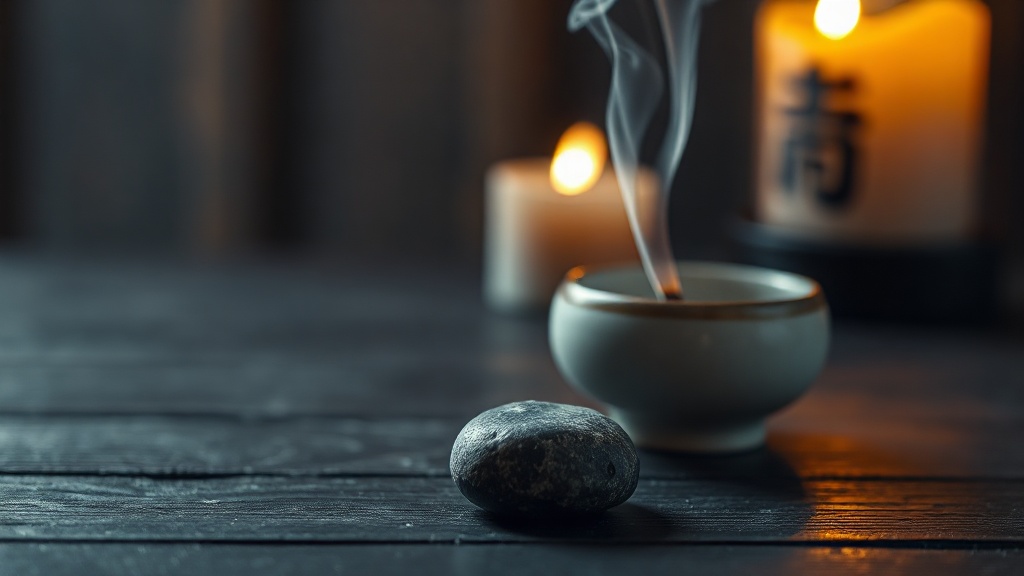
- Smoke: Pass the stone through incense smoke, white sage smoke, or Palo Santo smoke. This is a widely practiced cleansing ritual across many traditions and poses no risk to the stone.
- Selenite proximity: Placing black tourmaline on or near a selenite slab overnight is a common contemporary practice based on the belief that selenite continuously charges and cleanses other stones.
- Sound: Tibetan singing bowls placed near or around the stone can be used for cleansing through vibration. This method aligns naturally with Tibetan Buddhist ritual practice.
Physically, black tourmaline rates 7 to 7.5 on the Mohs hardness scale. It is durable enough for daily wear but will scratch softer stones if stored together. Keep polished pieces in a cloth pouch or separate compartment. Avoid prolonged exposure to direct sunlight, as some specimens show very slight fading over years, though this is rarely dramatic.
💡 Care at a glance
- Mohs hardness: 7 to 7.5 (durable, but store away from softer stones)
- Water safe? Briefly, for polished pieces; avoid for raw specimens with visible fractures
- Sunlight: Limit prolonged direct exposure to prevent gradual surface dulling
- Cleansing frequency: Monthly is a common benchmark; more often if worn daily or used in high-traffic spaces
Combining Black Tourmaline with Other Stones
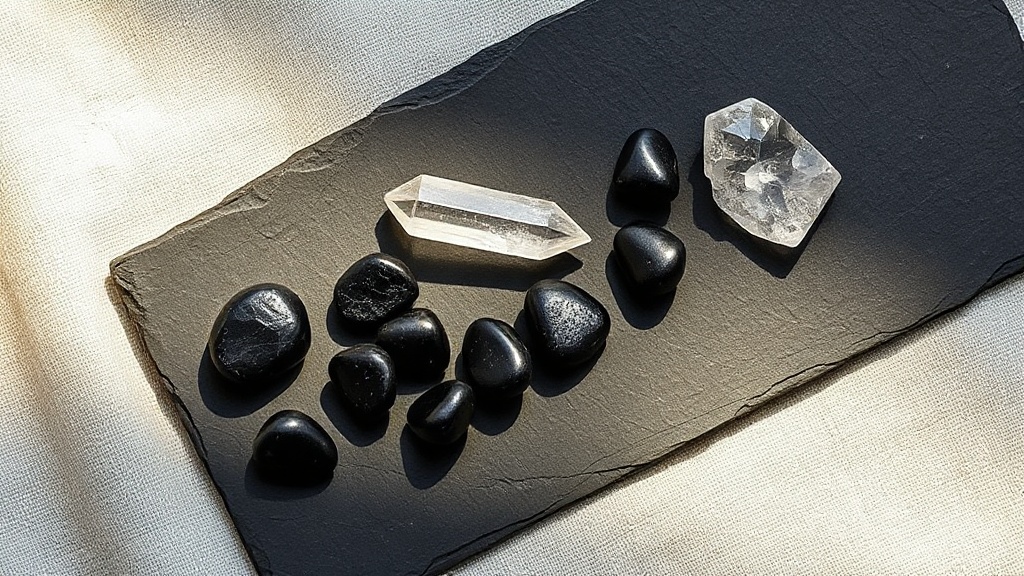
Practitioners frequently pair stones to create complementary effects within their symbolic framework. Black tourmaline is a particularly versatile pairing stone: its grounding, protective character in stone tradition provides a stable base around which lighter or more expansive stones can operate. The combinations below represent the most commonly cited pairings and the rationale behind each one.
| Stone | Traditional pairing rationale | Common use |
|---|---|---|
| Clear Quartz | According to stone tradition, amplifies the attributed properties of black tourmaline | Bracelets, altar clusters |
| Selenite | Cleansing and light energy to balance the grounding weight of black tourmaline | Altar placement, charging stations |
| Amethyst | Combining protection with calm, meditative focus | Meditation rooms, bedroom placement |
| Obsidian | Both associated with grounding in stone tradition; a layered protective pairing | Entryway placement, altar corners |
| Labradorite | Protection during spiritual work with added psychic shielding attribution | Worn during energy work or ritual practice |
These combinations are grounded in stone tradition, not pharmacology. For practitioners within a Buddhist framework, pairing black tourmaline with stones associated with clarity or compassion, such as clear quartz or rose quartz, is a way of extending the altar's symbolic vocabulary. How you use them is shaped by your own practice, aesthetic preferences, and the framework, whether Buddhist, Taoist, or otherwise, within which your spiritual life operates.

🌱 Tenzin's pick
Gemstone Necklace Collection
Natural stone pendants chosen for craft and cultural grounding, for wearing your practice rather than keeping it on a shelf.
Browse the full range
View collection →Choosing a Quality Piece: What to Look For
The market for black tourmaline is large and mostly reliable, since synthetic tourmaline is expensive to produce and rarely sold at consumer prices. That said, a few practical points help you buy well.
Raw clusters from Brazil are the most commonly available form. They range from a few dollars for small tumblestones to several hundred for large, well-formed specimens. Tumbled stones average $2 to $10 depending on size and quality. Jewelry-grade pieces set in silver or copper sit higher, reflecting the cutting and setting cost rather than the stone's rarity.
Look for:
- Consistent deep black color without excessive gray patches
- Visible vertical striations on raw pieces (confirms it is tourmaline rather than dyed glass or black obsidian)
- A slightly rough, matte texture on unpolished surfaces
- No cracks running perpendicular to the crystal's length, which indicate fragility
- For jewelry pieces: check that the setting holds the stone securely and that the mount material (silver, copper, brass) is labeled clearly
Black obsidian is sometimes sold as black tourmaline at lower price points. Obsidian is volcanic glass with a conchoidal fracture (smooth, curved breaks like broken glass) and is typically shinier overall. Black tourmaline breaks with uneven, rough fractures and shows those characteristic vertical striations along the prism faces. Knowing the difference protects you from a common substitution and ensures you are getting the mineral you intend to work with.
For online purchases, reliable indicators include: vendor descriptions that cite the specific variety (schorl), country of origin (Brazil, Afghanistan, Sri Lanka being the main sources), and photographs that show the striation detail clearly. Avoid listings where the stone is described only by color without any mineralogical information.
"The stone does not do the work. The stone holds the intention while the work happens."
A common framing among Tibetan lamas when asked about protective amulets.
Where Black Tourmaline Fits in a Buddhist Practice
Buddhism does not prescribe specific gemstones as part of the path. The Sutta Pitaka makes no mention of tourmaline or any equivalent protective mineral as a practice requirement. Tibetan Vajrayana Buddhism, however, has a rich tradition of physical supports for practice, from thangka paintings and torma ritual cakes to prayer beads and protective amulets. Within that framework, a black tourmaline amulet occupies the same category as a protective deity pendant or a written mantra sealed in a capsule: a physical anchor for an intention that lives in the practitioner's mind.
For practitioners from Theravada or Zen backgrounds, where ritual objects play a smaller role, black tourmaline as a grounding stone might simply serve as a mindfulness object: something handled before sitting, placed on the altar as a visual focus, or kept in a pocket as a tactile reminder of one's aspiration to remain present. The stone's function is what you bring to it. It carries no instructions.
If you are building a Buddhist altar or meditation space, black tourmaline integrates naturally alongside other ritual objects without dominating them. Its visual restraint, all black, no flash, suits spaces that already hold gold, bronze, and warm wood tones. Practitioners across the Sangha, whether they follow Mahayana, Vajrayana, or Theravada paths, tend to find a place for it precisely because it asks for nothing: it sits quietly in whatever context you assign it.
Frequently asked questions about black tourmaline
Is black tourmaline the same as black obsidian?+
No. Black tourmaline is a crystalline boron silicate mineral with visible vertical striations and a rough, matte texture. Black obsidian is volcanic glass with a smooth, glassy surface and conchoidal fracture. They are visually similar at first glance but mineralogically distinct. The difference matters when buying, since obsidian is sometimes sold as tourmaline at lower prices.
How often should I cleanse black tourmaline?+
Practitioners vary widely on this. A common recommendation is once a month, often timed to the full moon, or after any period of particularly intense use or exposure to stressful environments. There is no fixed rule; it depends on how actively you use the stone and your own sense of when it feels energetically "heavy." A quick rinse under cold water or an overnight moonlight session is usually considered sufficient.
Can black tourmaline go in water?+
Polished tumblestones handle brief rinsing well given tourmaline's Mohs hardness of 7 to 7.5. Raw specimens with micro-fractures are more vulnerable to water ingress over time, so stick to smoke or moonlight cleansing for those. Avoid submerging any form in water for extended periods.
Does black tourmaline really block EMFs?+
No scientific study has demonstrated that black tourmaline blocks electromagnetic radiation. The claim stems from the stone's real piezoelectric property, the ability to generate a small charge under pressure, which was extrapolated into metaphysical territory in the 20th century. Place the stone near your devices if it fits your practice, but do not rely on it as shielding in any technical sense.
Where is the best place to put black tourmaline in a home?+
The most common placements are near the front door or entryway (as a threshold protector), in the corners of a room where you spend most time, or on a meditation altar. If you are using it as a grounding stone during sitting practice, keep it at the base of your cushion or on the floor beside you. For sleep use, some practitioners place a piece under the bed or on a bedside table, though this is entirely personal preference.
Is black tourmaline used in Buddhist practice?+
There is no canonical Buddhist prescription for black tourmaline specifically. However, Tibetan Vajrayana Buddhism has a long tradition of protective amulets made from dark stones, and black tourmaline fits naturally within that category. According to Buddhist belief in the Vajrayana tradition, such physical objects serve as anchors for a practitioner's protective intention. For practitioners from Theravada or Zen backgrounds, it functions more as a secular mindfulness object or a personal symbol of grounding intention rather than a prescribed ritual tool.
How do I tell if my black tourmaline is real?+
The most reliable visual indicator is the presence of fine vertical striations running the length of the stone. Genuine black tourmaline (schorl) will also feel slightly rough and matte on unpolished surfaces, and it fractures unevenly rather than with the smooth, glassy break of obsidian. If a stone is being sold as tourmaline but has a mirror-like sheen and no visible ridges, treat it with skepticism. For higher-value pieces, ask for mineralogical documentation or purchase from a reputable lapidary supplier.


