

The Nine Eye Dzi Bead: History, Symbolism, and How to Wear It
Few objects in the Tibetan Buddhist world carry as much weight, literally and symbolically, as the dzi bead. Among all the varieties that exist, the nine eye dzi occupies a particular place of reverence. Found in monasteries across the Himalayas, worn by nomads in Tibet and Ladakh for centuries, and now sought by collectors and practitioners worldwide, this small cylindrical agate bead is one of the most studied and most misunderstood ritual objects in East Asian spiritual culture.
The nine eye dzi is not a modern product. It belongs to a tradition thousands of years old, and understanding it properly means setting aside some of the more fanciful claims that tend to surround it. What you find instead is something richer: a material artifact with deep iconographic roots, a contested history, and a living presence in Tibetan Buddhist practice today.
⭐ Key points
- Dzi beads are ancient agate beads, likely originating in the Iron Age, with a distinctive etched or stained pattern of "eyes."
- The nine eye dzi is among the most prized varieties; in Tibetan tradition, nine eyes carry specific protective and auspicious symbolism.
- Authentic antique dzi beads are rare and expensive; most beads on the market today are modern reproductions, which carry their own value.
- The qualities attributed to dzi beads belong to Tibetan spiritual tradition and belief, no therapeutic or miraculous effects are scientifically recognized.
- Wearing a dzi bead as part of a mala, bracelet, or pendant is an accepted lay practice across the Himalayas.
What Is a Dzi Bead?
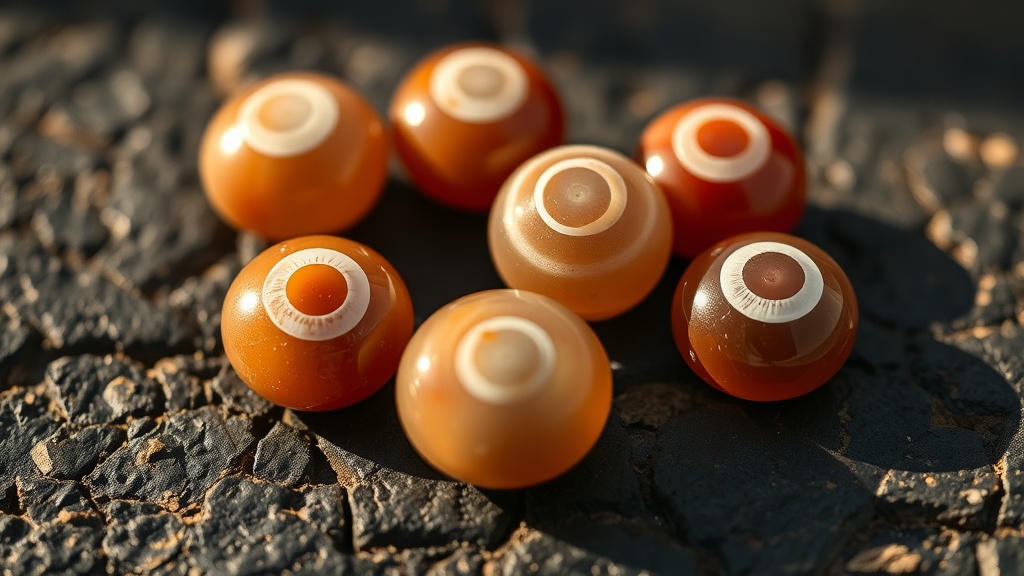
The word dzi (གཟི་) in Tibetan is generally translated as "shine," "brightness," or "splendor." Dzi beads are elongated, barrel-shaped or cylindrical agate beads decorated with geometric patterns, circles, squares, waves, stripes, and the circular motifs known as "eyes", created through a combination of heat treatment and chemical etching techniques that are still not fully understood by scholars.
They appear in archaeological contexts stretching from Central Asia through the Iranian plateau into the Himalayas, with the earliest specimens dated to roughly the first millennium BCE. The exact place of origin remains debated. Some researchers point to the ancient civilizations of what is now Bactria (modern Afghanistan and northern Iran); others trace concentrated deposits to the ancient Zhangzhung kingdom of western Tibet. What is clear is that by the time of the historical Buddha (around the 5th century BCE), beads of this type were already in circulation as prestige objects across a wide swath of Asia.
💡 Did you know?
The etching technique used to create the patterns on genuine antique dzi beads has never been fully replicated or explained by modern materials science. Some researchers believe it involved a multi-stage process of alkaline chemical treatment and selective bleaching, but the exact formula, if there ever was a single one, has been lost to time.
The Significance of Eyes in Dzi Bead Culture
The "eye" motif on a dzi bead, that ringed circular pattern, sometimes resembling a bull's eye, is the defining feature that gives each bead its classification. A one eye dzi, a three eye dzi, a nine eye dzi: the number of eyes determines the bead's name, its place in the iconographic hierarchy, and the symbolism attributed to it within Tibetan tradition.
In Tibetan Buddhist cosmology, eyes carry layered meaning. The Eye of Wisdom, the capacity to see reality as it truly is, unobstructed by delusion, is one of the defining attributes of a fully awakened being. The Buddha is described in the Pali canon as possessing the dibba cakkhu, the divine eye that perceives beings across time and space. Placing eye symbols on a protective object is a way of evoking that quality of clear seeing, of warding off the obstructed vision that, in Buddhist thought, underlies all suffering.
Each count of eyes carries its own traditional associations. Three eyes evoke the Three Jewels (Buddha, Dharma, Sangha). Six eyes correspond to the six realms of existence. Nine, the number at the heart of this article, holds a specific and elevated status in Tibetan numerology and cosmology.
Nine: A Number with Weight in Tibetan Tradition
In Tibetan culture, nine (དགུ, gu) is considered particularly auspicious, and this predates the introduction of Buddhism to Tibet. The Bon tradition, the indigenous spiritual system that preceded and was later intertwined with Tibetan Buddhism, organized much of its cosmology around the number nine. There are nine ways of Bon, nine cosmic spheres, nine-fold classifications of beings and deities.
When Buddhism arrived in Tibet and gradually absorbed or coexisted with Bon elements, the numerological weight of nine carried over. In the tantric schools of Vajrayana, nine-fold mandalas and nine-deity practices appear across multiple lineages. The Bardo Thodol (the Tibetan Book of the Dead) describes the post-death process in terms that include multi-fold numerological structures, and the number nine remains embedded in ritual counts and symbolic arrangements throughout the tradition.
Within this context, a dzi bead bearing nine eyes is understood in Tibetan tradition as a particularly concentrated form of protective power and auspicious energy. It is not a casual ornament.
What the Nine Eyes Represent
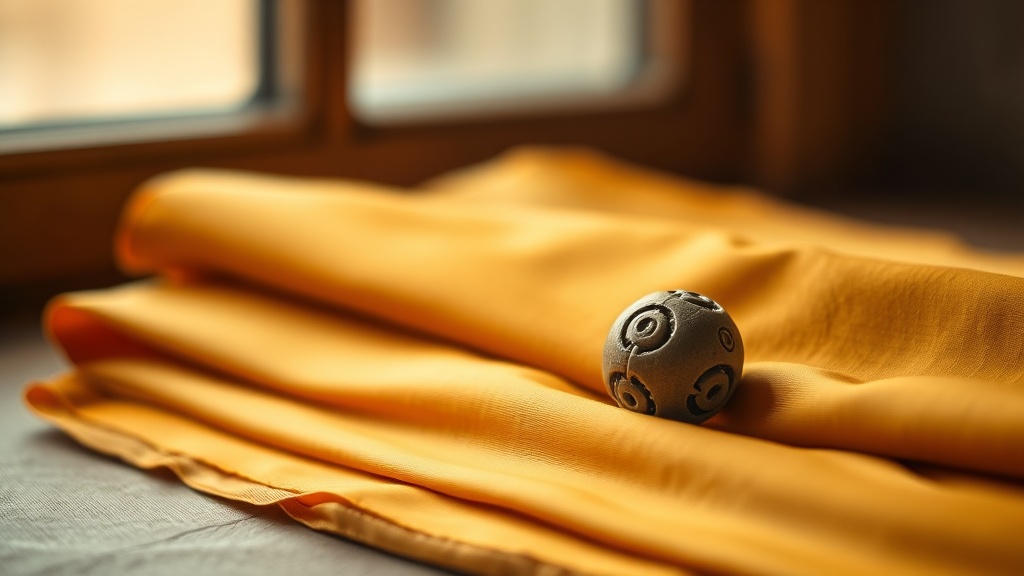
In the Tibetan tradition, the nine eyes of the nine eye dzi are associated with several interconnected symbolic clusters. Different lineages and teachers emphasize different aspects, and no single authoritative text provides a definitive gloss, dzi bead lore is largely oral and regional. That said, a broad consensus exists around a few themes.
- The nine-fold merit field: The nine eyes are said to represent an accumulation of merit across multiple dimensions, evoking the vast interconnected community of awakened beings that practitioners take refuge in.
- Protection from obstacles: In Tibetan ritual practice, the concept of gek (obstacle, obstruction) is taken seriously. Protective objects are worn to deflect circumstances that might hinder one's practice or life. The nine-eyed bead is traditionally considered one of the strongest forms of this protection.
- Auspiciousness and abundance: Nine eyes are linked in folk tradition to the fulfillment of aspirations, not in a transactional sense, but in the sense of clearing the conditions that obstruct a well-lived life aligned with Dharma.
- The nine consciousnesses: In Yogacara Buddhist philosophy, which had profound influence on Tibetan thought, the mind is analyzed into eight or nine layers of consciousness, with the deepest (sometimes called amala vijnana, pure consciousness) representing the unobstructed ground of awareness. Some teachers connect the nine eyes to this philosophical map of mind.
🗂️ Explore the collection
Thangka
Deepen your understanding of Tibetan Buddhist iconography with painted scroll art that brings the same symbolic vocabulary to life.
26 références
Discover the collection →Authentic Antique Dzi vs. Modern Reproductions
This is where clarity matters most, because the market around dzi beads, and nine eye dzi in particular, is complicated. Genuine antique dzi beads, meaning beads that pre-date the 20th century and show the characteristic surface weathering, natural iridescence, and micro-cracking patterns that indicate age, are genuinely rare objects. When they appear at auction, fine specimens can command prices equivalent to precious gemstones. Tibetan families have passed them down across generations as heirloom objects of the highest value.
The vast majority of dzi beads in circulation today are modern reproductions. This includes beads made in China, Taiwan, Nepal, and India using contemporary etching methods on natural agate or glass. This is not inherently deceptive if the seller is honest about what they are selling. A well-made modern nine eye dzi is a meaningful object that carries the iconographic tradition forward. What it is not is an antique artifact.
| Feature | Antique Dzi Bead | Modern Reproduction |
|---|---|---|
| Age | Typically centuries old (Iron Age to pre-modern) | Manufactured in past decades |
| Material | Natural agate, often with weathering cracks and surface patina | Agate, glass, or composite stone; uniform finish |
| Etching technique | Ancient, partially unknown process; deep saturation | Modern chemical or mechanical etching; surface-level patterning |
| Price range | Can reach thousands to tens of thousands of dollars per bead | A few dollars to a few hundred, depending on craftsmanship |
| Availability | Rare; mostly in private collections or specialist auctions | Widely available online and in Himalayan craft markets |
| Symbolic validity | Full traditional weight; ritual consecration history | Carries iconographic tradition; can be consecrated by a lama |
⚠️ Important note
The qualities attributed to dzi beads, including the nine eye dzi, belong to Tibetan spiritual traditions and beliefs. No therapeutic or protective effect is scientifically recognized. These objects are not substitutes for medical advice or treatment. If a seller claims otherwise, treat that claim with caution.
How Dzi Beads Enter Practice: Consecration and Use
In Tibetan Buddhist practice, a material object does not carry ritual weight simply by existing. It needs to be consecrated, rabne (རབ་གནས) in Tibetan, by a qualified lama through a specific ceremony that typically involves recitation of mantras, visualization of the relevant deity or principle, and formal dedication of the object's purpose. This applies to statues, thangkas, malas, and dzi beads alike.
For lay practitioners, having a nine eye dzi consecrated by a lama before wearing it is the traditional approach. The ceremony does not "activate" the bead in a mechanical sense; rather, it establishes an intentional relationship between the object, the practitioner, and the lineage the bead now formally represents. Many Tibetan families will take a new bead to their local monastery before a child begins to wear it.
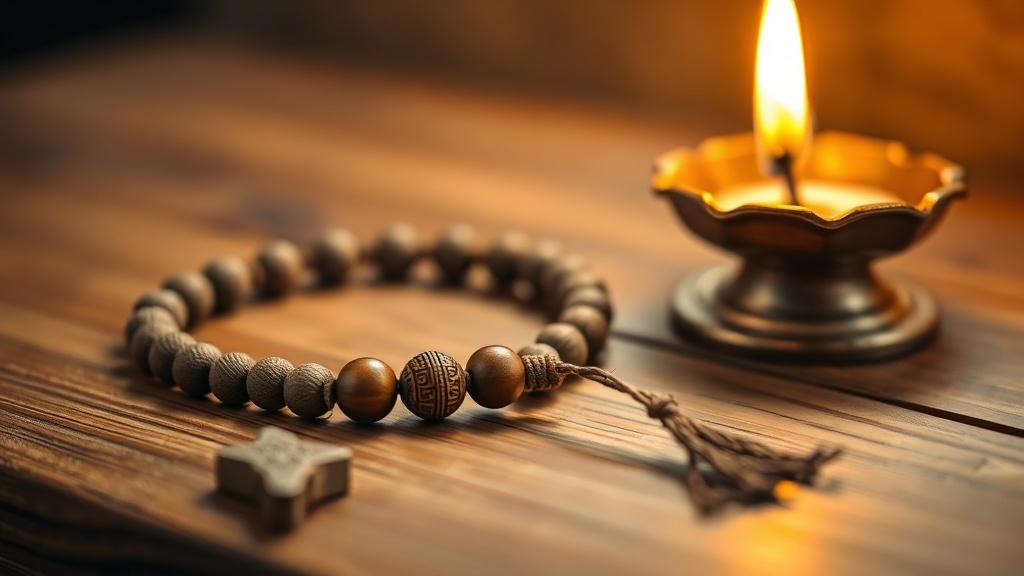
Outside of formal consecration, dzi beads are also worn as reminders of practice, much as a rosary functions in Catholic tradition, or a mala in any Buddhist school. The nine eye bead worn on the wrist or strung into a mala keeps the practitioner's intention present throughout the day.
"The bead is not the power. The intention behind wearing it, and the practice it points to, that is where the power lies."
A common teaching framing in Tibetan Vajrayana instruction on ritual objects
Wearing the Nine Eye Dzi: Practical Considerations
Whether you are a practitioner incorporating a nine eye dzi into your daily practice or someone drawn to the object's history and craft, a few practical points are worth knowing.
Wrist or neck? Both are traditional. Worn on the wrist as a single bead or as part of a bracelet, the nine eye dzi is accessible throughout the day. Worn as part of a mala around the neck, it becomes integrated into the rhythm of recitation practice. There is no single correct approach, consult the guidance of your teacher if you have one.
Care of the bead. Natural agate is relatively hard and durable (Mohs hardness around 6.5, 7), but the surface patterning on dzi beads can be sensitive to harsh chemicals. Avoid soaking in cleaning solutions. Wipe gently with a soft cloth. Some practitioners keep their bead wrapped in silk when not in use.
Pairing with other objects. A nine eye dzi pairs naturally with a mala, particularly a sandalwood or rudraksha mala for daily recitation. It can also be incorporated into a simple altar arrangement alongside a small statue or a butter lamp.

🗂️ Explore the collection
Singing Bowl
A hand-hammered singing bowl pairs naturally with dzi bead practice to anchor a sitting session with sound and intention.
4 références
Discover the collection →Frequently asked questions
What makes the nine eye dzi different from other dzi beads?+
The number of eyes on a dzi bead determines its classification and the symbolic associations attributed to it in Tibetan tradition. Nine is considered among the most auspicious numbers in both Bon and Tibetan Buddhist cosmology, giving the nine eye dzi a particularly elevated status. Each eye count carries distinct iconographic meaning, a three eye dzi evokes the Three Jewels, for example, while nine eyes are associated with broad protection, accumulated merit, and the removal of obstacles.
How can I tell if a nine eye dzi bead is genuine antique or a reproduction?+
Genuine antique dzi beads show characteristic signs of age: a specific surface weathering known as "dzi skin," micro-cracks distributed evenly across the bead, natural mineral inclusions, and a deep saturation of the etched pattern that modern processes struggle to replicate. Accurate authentication typically requires an expert gemologist or specialist in Himalayan antiquities. Most beads sold today, including many described as "authentic", are modern reproductions of varying quality. Being honest with yourself about what you are buying is the simplest protection against overpaying.
Do you need to be a Buddhist to wear a nine eye dzi?+
No, you do not need to be a Buddhist practitioner to wear a dzi bead. These beads have been worn across many cultures in Asia as ornaments, protective amulets, and prestige objects for millennia. That said, if you wear a nine eye dzi with some understanding of its cultural and spiritual context, you are engaging with the tradition more honestly and respectfully than if you treat it as a purely decorative piece with vague "energy" claims.
Does a nine eye dzi need to be consecrated before use?+
In Tibetan Buddhist practice, consecration by a qualified lama (the rabne ceremony) is the traditional way to formally establish an intentional relationship between a ritual object and its wearer. It is not strictly required for someone outside the tradition, but for practitioners, it is considered the appropriate first step. If you have access to a Tibetan Buddhist center or teacher, asking about consecration is entirely reasonable and will usually be welcomed.
Where do dzi beads originally come from?+
The geographic origin of the dzi bead tradition is still debated among archaeologists and historians. The most widely cited theories point to ancient Central Asia, particularly the cultures of Bactria and the ancient Iranian plateau, as the likely origin point, with the tradition spreading eastward into Tibet, Nepal, and the broader Himalayan region. Significant concentrations of ancient specimens have been found in archaeological sites across what are now Afghanistan, Pakistan, and western China. In Tibetan folk tradition, dzi beads are sometimes said to have fallen from the sky or been found in the earth as naturally occurring objects, a mythological origin story that reflects how sacred these beads have long been considered.


