

Bell and Dorje: The Inseparable Ritual Pair at the Heart of Vajrayana Practice
Pick up a bell and dorje for the first time, and you hold something that has been resting in practitioners' hands for over a thousand years. The dorje sits in the right palm with a weight that feels considered rather than accidental. The bell's resonance, when struck, sustains cleanly for several seconds, long enough to follow with the breath. These are not decorative objects. They are liturgical instruments, and understanding what they represent changes the way you hear that sound.
⭐ Key points
- The dorje (Sanskrit: vajra) represents skillful means and compassion; the bell (ghanta or drilbu) represents wisdom and emptiness.
- Used together, they enact the union of method and wisdom that Mahayana and Vajrayana traditions hold as the path to awakening.
- The dorje is held in the right hand; the bell in the left. This is canonical, not conventional.
- Most sets are cast in a traditional alloy of five to seven metals; quality varies significantly between mass production and artisan work.
- Even without initiation, understanding the symbolism deepens both study and seated practice.
What the Dorje Actually Is - and Where the Word Comes From
The Tibetan word dorje (rdo rje) translates literally as "lord of stones" or "noble stone," but its Sanskrit counterpart, vajra, carries the primary semantic weight: thunderbolt, diamond, the indestructible. In Vedic literature predating Buddhism, the vajra was the weapon of Indra, king of the devas. When Vajrayana Buddhism absorbed and reinterpreted that imagery around the 7th and 8th centuries CE, the vajra shed its martial connotations and became a symbol of the indestructible nature of awakened mind.
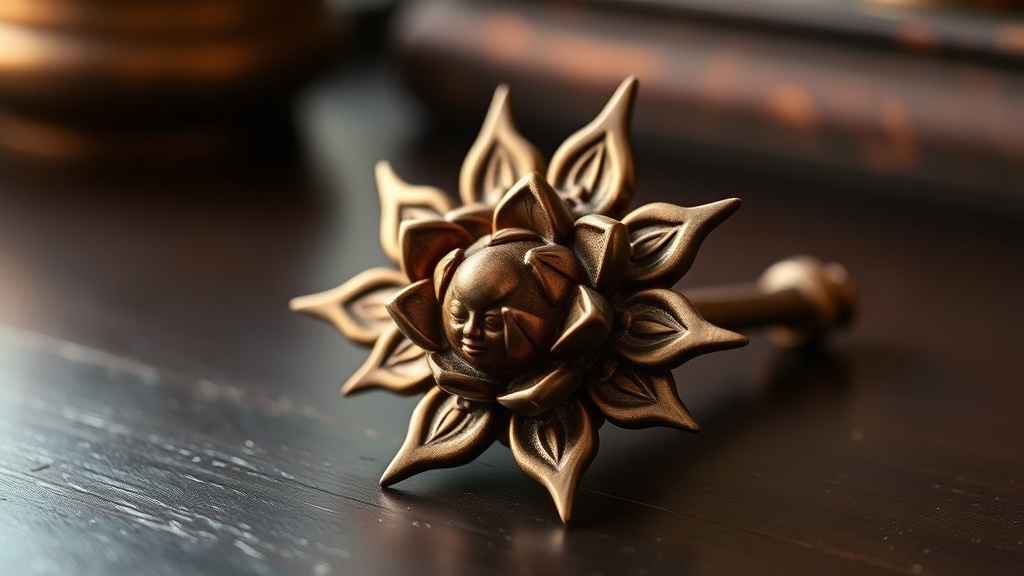
Physically, the dorje is a short scepter, typically 10 to 15 cm long for a standard ritual set, with a central sphere flanked by two lotus-petal cups, from each of which prongs radiate outward and curve to meet at a single point. The number of prongs matters: a three-pronged dorje (*trisula* form) refers to the Three Jewels (Buddha, Dharma, Sangha); a five-pronged dorje, far more common in Tibetan ritual, refers to the five Buddha families (Tathagata, Vajra, Ratna, Padma, Karma) and the purification of the five poisons into the five wisdoms. Nine-pronged forms exist but appear mainly in specific Nyingma and Kagyu contexts. Practitioners seeking a standard set for Vajrayana sadhana will find the five-pronged form most widely prescribed by teachers across all four major Tibetan schools (Nyingma, Kagyu, Sakya, Gelug).
💡 Did you know?
The word "vajra" appears in the Rigveda, one of the oldest Sanskrit texts, dating to roughly 1500 BCE. Long before it became a Buddhist ritual object, the thunderbolt-scepter was a divine weapon symbolizing sovereign power. Tantric Buddhism absorbed the term and completely reframed it, making the vajra a symbol of clarity and indestructibility rather than conquest.
The Bell (Ghanta / Drilbu): Sound as Doctrine
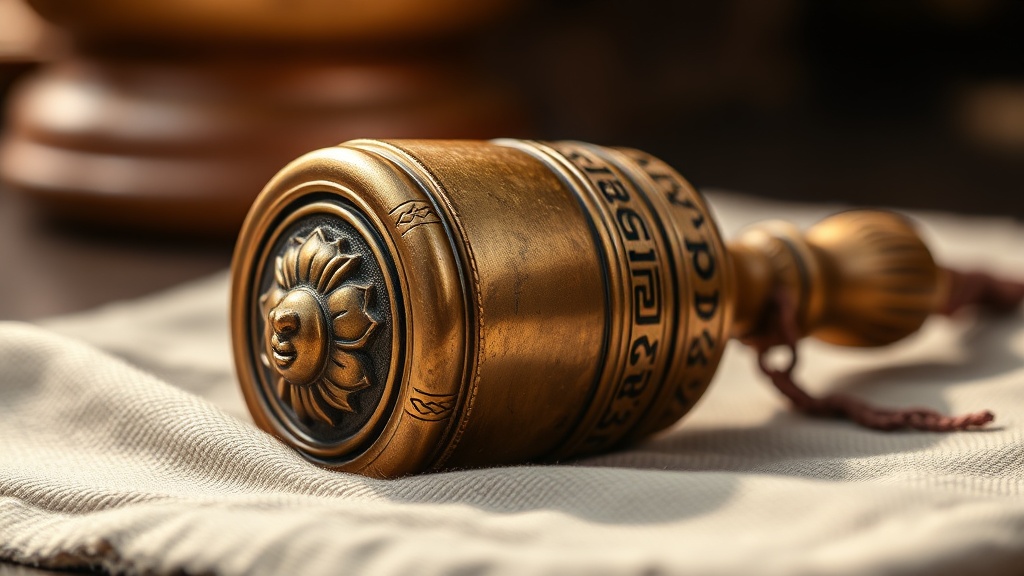
The Tibetan bell used in ritual is called drilbu (dril bu), from the Sanskrit ghanta. Its form follows a strict iconographic program. The handle, rising above the bell's shoulder, is cast as half a dorje fused to the face of Prajnaparamita, the bodhisattva embodying the Perfection of Wisdom. This is not ornamentation. It encodes the bell's doctrinal identity directly into its material form: the bell is wisdom, and the handle half-dorje is the method by which wisdom is applied.
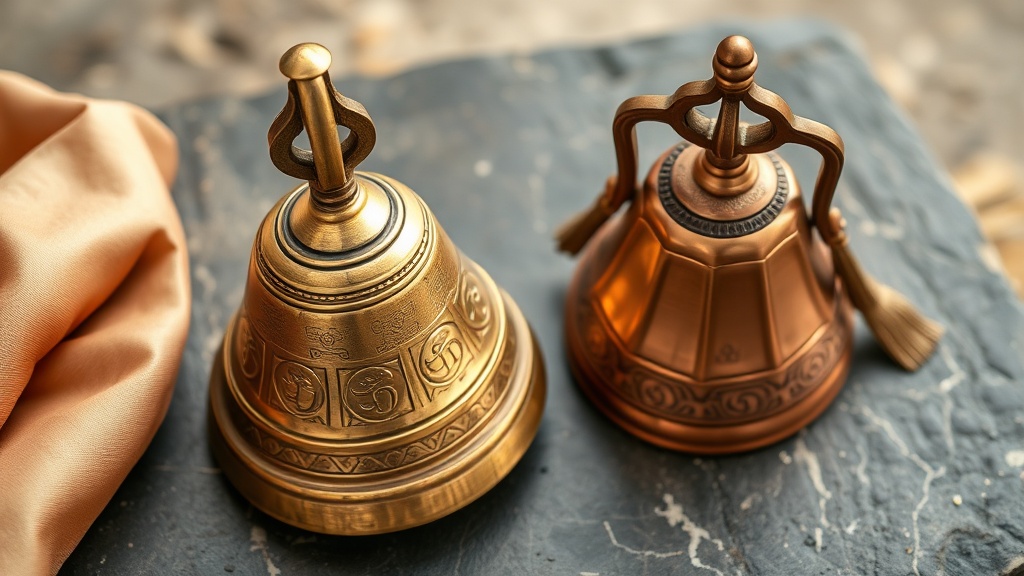
The body of the bell carries eight lotus petals around its base, a decorative band of Sanskrit or Tibetan mantras in the middle register, and, in finer examples, a frieze of the eight auspicious symbols (*Ashtamangala*) below the lip. Standard ritual bells measure 15 to 20 cm in height with a diameter of 8 to 12 cm. Weight in a seven-metal alloy set typically falls between 250 and 400 grams for the bell alone.
The sound itself carries meaning. Sounding the bell at the opening of a ritual practice invites the presence of the Three Jewels, signals the practitioner's intention, and, within tantric liturgy, represents the voice of the Dharma cutting through the noise of conditioned mind. The tone should sustain cleanly for several seconds after the striker is removed. A dull, short ring is considered a sign of poor metal ratios or structural flaws in the casting.
Symbolism in Paired Use: Why the Two Objects Are Inseparable
The bell and dorje ritual symbolism only becomes fully legible when the two objects are understood together. Holding the dorje in the right hand activates its association with *upaya* (skillful means, method, compassion). Holding the bell in the left hand activates its association with *prajna* (wisdom, the direct recognition of emptiness). Neither object is complete alone.
In Mahayana philosophy, the pairing reflects a core soteriological argument: awakening cannot result from wisdom alone, untethered from engaged compassion, nor from compassionate action uninformed by clear seeing. The Bodhicharyavatara of Shantideva (8th century) spells this out at length, and the physical form of the bell-and-dorje set is its ritual enactment. You hold the argument in your hands, literally. Practitioners working within the Shantideva commentarial tradition, particularly those drawn to five-pronged sets for their Mahayana resonance, will find our Meditation and Prayer collection sourced from Patan workshop partners who specialize in precisely this form.
"The inseparability of method and wisdom is the very heart of the path. Separate them, and both are diminished."
Paraphrased from standard Vajrayana tantric commentary on the vajra-ghanta pairing, as reflected in Gelug and Kagyu instructional texts on ritual hand implements.
Secondary symbolic layers accumulate with context. The bell-dorje pair can represent:
- The masculine and feminine principles in tantric cosmology (dorje: masculine; bell: feminine)
- Samsara and nirvana held simultaneously, pointing toward the non-dual recognition that neither exists independently
- The two accumulations of merit (*punya*) and wisdom (*jnana*) required for full awakening
- In highest yoga tantra contexts, the bliss-emptiness union central to completion-stage practices
How to Hold and Use the Bell and Dorje in Practice
For practitioners beginning tantric *sadhana* (ritual practice texts), correct hand positioning is taught explicitly. The dorje rests in the right hand, held between thumb and the base of the ring finger, prongs pointing outward or sometimes resting against the wrist, depending on the liturgical phase. The bell hangs from the left hand, its handle gripped between thumb and index finger, the bell mouth facing slightly downward to allow the sound to project.
During recitation, the bell is rung at specific textual markers, not continuously. In many Tibetan liturgies (*puja* texts), small bell symbols or explicit instructions appear in the margin of the text to indicate when to ring. Between marked passages, both objects rest in the lap or are set on a small ritual table to the practitioner's side.
*Mudras* (ritual hand gestures) performed while holding both objects are called vajra mudras and appear throughout highest yoga tantra. The practitioner forms specific configurations that vary by *yidam* (meditational deity) and ritual context. These gestures are transmitted directly by a qualified teacher within the initiation (*wang*) or instruction (*tri*) context. Learning them from written description alone is not the intended method, and most lamas will say the transmission is partly what activates the practice.
For those outside formal initiation, the bell and dorje still function as objects of focused attention during seated meditation, as a way of bringing the philosophical pairing of wisdom and method into physical presence. Ringing the bell at the opening and close of a sitting period is a common practice across Tibetan Buddhist households and retreat centers worldwide.
Materials and Craftsmanship: What the Differences Actually Mean
Traditional Tibetan bell-and-dorje sets are cast in a seven-metal alloy known as "Tibetan seven metals" (sometimes listed as gold, silver, copper, iron, tin, lead, and zinc, though precise compositions vary by workshop and historical period). The proportions of each metal affect both the acoustic quality of the bell and the color of the patina over time. Gold or silver-forward alloys ring with more brightness and sustain. Higher iron content deepens the tone.
| Criterion | Artisan / Traditional | Mass-Produced |
|---|---|---|
| Metal composition | 5-7 metal alloy, hand-mixed per workshop tradition | Brass or zinc alloy, machine-poured |
| Bell tone | Full, sustaining ring (5-10 seconds+) | Short, thin ring (1-3 seconds) |
| Iconographic detail | Hand-chased Prajnaparamita face, crisp mantra band | Cast detail, often blurred at edges |
| Origin | Nepal (Kathmandu Valley workshops), Tibet | Industrial casting, various countries |
| Price range | USD 80-400+ for a matched set | USD 15-50 for a set |
Kathmandu Valley workshops, particularly in the Patan district, have produced ritual instruments for centuries. Patan artisans traditionally inherit casting knowledge across family lines, and the best Newar craftsmen are known for bell tones that hold a pure pitch without wavering harmonics. The Newar metalworking community of Patan has maintained its foundry traditions largely unbroken, passing alloy formulations and chasing techniques from master to apprentice within tightly knit family workshops. If you are selecting a set for regular practice rather than display, ring the bell before buying. The sound tells you more than the price.
For practitioners seeking artisan-quality five-pronged sets connected to this living Patan tradition, our Meditation and Prayer collection includes sets sourced directly from Newar workshop partners in the Patan district, where each piece is individually cast, hand-chased, and matched before shipping. The Prajnaparamita face detail on these bells is finished by hand rather than left as raw casting, which makes a visible and audible difference.
The Dorje Across Buddhist Schools: Vajrayana, Shingon, and Beyond
The Tibetan dorje in Buddhist tradition is most closely associated with Vajrayana, the tantric vehicle practiced in Tibet, Bhutan, Nepal, Mongolia, and parts of Russia's Buryatia region. But the vajra appears in other traditions, often with different ritual forms.
In Japanese Shingon Buddhism, the vajra (*kongo-sho* in Japanese) appears as a single-pronged or five-pronged implement used in similar paired-hand ritual work. Kukai (774-835 CE), who brought esoteric Buddhism from Tang Dynasty China to Japan, brought the vajra-bell pairing as a central element of his transmission. Japanese kongo-sho sets tend to be more austere in decoration, often polished brass without the deity faces found on Tibetan drilbu handles.
In Theravada contexts, the vajra symbol appears in architectural decoration and iconography but is not used as a hand-held liturgical instrument in the same way. The ritual sound function is covered instead by wooden percussion instruments (like the wooden fish, *mokugyo*) or small handbells in specific regional traditions.
In Bon, the pre-Buddhist indigenous religion of Tibet that was significantly influenced by and in turn influenced Vajrayana, the bell-and-dorje pairing appears with closely parallel symbolism, though Bon practitioners use different deity names and cosmological frameworks to interpret it. The Bon term for the vajra is *yungdrung*, connected to the eternal swastika symbol central to Bon cosmology, and the bell in Bon ritual carries a comparable function to the Vajrayana drilbu in framing the opening and close of ceremonial practice.
💡 Did you know?
The Metropolitan Museum of Art holds a drilbu and dorje set from 18th-century Tibet in its permanent collection. Examining museum-quality pieces in person is one of the best ways to understand the level of iconographic precision that traditional Newar and Tibetan craftsmen achieved before industrialization changed the market.
Selecting a Bell and Dorje Set: Practical Considerations for Practitioners and Gift Buyers
Choosing a set depends on your intended use. For formal Vajrayana practice within a lineage, your teacher or dharma center may have specific requirements about size, prong count, and whether the set should be consecrated (blessed) before use. Many lamas prefer that students bring their instruments to a blessing ceremony rather than purchasing pre-consecrated sets online.
For general meditation use, study, or as a thoughtful gift for a practitioner, the following points are worth checking:
- Prong count: Five-pronged sets are the standard for most Tibetan Buddhist practice. Three-pronged or single-pronged variants are less common and linked to specific ritual contexts.
- Size matching: Bell and dorje in a set should be proportioned to each other. A common pairing is a bell of 15-18 cm paired with a dorje of 10-13 cm. Mismatched sets exist and can indicate factory production rather than artisan pairing.
- Bell tone: Strike the bell with the wooden or leather clapper provided, then time the ring. Quality instruments ring for at least 5 seconds cleanly. A wavering or buzzing overtone may indicate a casting flaw or poor alloy.
- Handle face: On a well-made bell, the Prajnaparamita face on the handle should have recognizable facial features, a crown, and lotus detail. Blurred casting indicates lower quality.
- Weight: A standard seven-metal set weighs approximately 300-450 grams combined. Unusually light sets are often brass or zinc castings.

Caring for Your Bell and Dorje Over Time
Metal ritual instruments require straightforward maintenance. The main risk is tarnish on the bell's interior, which can subtly dampen the tone. A soft, dry cloth after each use keeps the surface clean without introducing moisture. Many practitioners avoid chemical metal polishes on the bell, preferring the gradual patina that develops with years of use as part of the object's character.
Storage matters more than many buyers realize. Keeping the set wrapped in silk or cotton cloth inside a wooden or fabric pouch prevents metal-on-metal contact that dulls fine details over time. Avoid storing near incense sticks directly, as accumulated residue on the bell's interior affects resonance.
The dorje requires less acoustic maintenance but benefits from the same cloth storage. If fine detail in the prongs becomes clogged with incense residue, a soft bristle brush (the kind used for electronics) clears it without scratching. Avoid immersing the dorje in water, as moisture in the central sphere's seam can cause oxidation that is difficult to reverse.
The Bell and Dorje as Objects of Study - Not Only of Use
Even practitioners who have not received Vajrayana initiation find value in keeping a bell and dorje set on their altar or study desk. The physical presence of the pair serves as a tangible prompt for the philosophical question at the center of Mahayana practice: how do wisdom and compassion work together? The objects make an abstract teaching concrete.
For students of Buddhist iconography, the bell-and-dorje pairing appears across a vast field of thangka paintings, sand mandalas, and ritual art. Recognizing the pair in its visual contexts, held by wrathful and peaceful deities alike, builds a kind of visual literacy that deepens engagement with the tradition over time. The Bardo Thodol (Tibetan Book of the Dead), for instance, describes the sounds heard during the *bardo* (intermediate state between death and rebirth) in terms that invoke the resonance of ritual instruments. The bell's sound is not incidental to that text.
For students building a broader study practice, Robert Beer's The Handbook of Tibetan Buddhist Symbols (Shambhala Publications) offers detailed iconographic analysis of the vajra and ghanta alongside the full range of Tibetan symbolic imagery. It is one of the more reliable English-language references on this material and a useful companion to hands-on practice with the instruments themselves.
If your interest runs toward the broader landscape of Buddhist altar objects and decor, the bell and dorje sit at the center of that world alongside butter lamps, incense holders, singing bowls, and offering bowls. Each has its own symbolic field, but the bell-and-dorje pair is unique in that it is held, not placed. It is practice equipment in the most direct sense.

For those building an altar space, the bell-and-dorje set pairs naturally with a well-considered collection of Zen and Buddhist altar objects, where each item carries a specific function rather than being purely aesthetic. The discipline of choosing objects with clear symbolic grounding, rather than assembling things that simply look related, is itself a form of practice.
Frequently asked questions about bell and dorje
What is a dorje in Tibetan Buddhism?+
A dorje (Tibetan: rdo rje; Sanskrit: vajra) is a short ritual scepter used in Vajrayana Buddhist practice. The Tibetan word means "lord of stones" or "noble stone," while the Sanskrit vajra translates as "thunderbolt" or "diamond," pointing to indestructibility and clarity. In ritual use, the dorje represents skillful means (upaya) and compassion, held in the right hand as the active principle of the practice.
How do you hold the bell and dorje correctly?+
In Vajrayana practice, the dorje is held in the right hand and the bell (ghanta or drilbu) in the left. The dorje rests between the thumb and the base of the ring finger, prongs pointing outward. The bell is gripped by the handle between thumb and index finger, with the bell mouth angled slightly downward. This positioning is consistent across Tibetan Buddhist lineages and is described explicitly in liturgical texts and oral transmissions.
What does the bell represent compared to the dorje?+
The bell represents prajna, or wisdom, specifically the wisdom of emptiness (shunyata). Its sound is understood in Vajrayana liturgy as the voice of the Dharma and the resonance of awakened awareness. The dorje represents upaya, or method, the compassionate application of wisdom in action. Used together, they enact the inseparability of wisdom and means that Mahayana philosophy holds as the complete path to awakening.
Do you need initiation to use a bell and dorje?+
For formal Vajrayana tantric practice, most Tibetan Buddhist teachers recommend receiving an initiation (wang) before incorporating the bell and dorje into sadhana. However, using the bell to open and close a sitting meditation session, or keeping the set on an altar as an object of contemplation, does not require initiation. Many practitioners begin with the objects as study tools and transition to liturgical use once they have entered a lineage relationship with a teacher.
What metals are used in traditional Tibetan bell and dorje sets?+
Traditional sets use a seven-metal alloy commonly described as including gold, silver, copper, iron, tin, lead, and zinc, though exact formulations vary between workshops and historical periods. The alloy affects both the color of the finished piece and the acoustic quality of the bell. High-quality artisan sets from Patan, Nepal, are cast using formulations maintained within Newar metalworking families for generations. Mass-produced sets typically use simple brass or zinc alloys, which produce a noticeably shorter and thinner bell tone.
How does the bell and dorje differ across Buddhist schools?+
In Tibetan Vajrayana, the paired bell and dorje are central liturgical instruments used in daily sadhana and formal puja. In Japanese Shingon Buddhism, a closely related pairing exists using the kongo-sho (vajra) and a ritual bell, transmitted by Kukai in the 9th century. Theravada traditions do not use the vajra as a hand-held implement but incorporate bell-like sounds through other percussion instruments. Bon, the indigenous tradition of Tibet, uses the bell-and-dorje pairing with parallel structure but different cosmological interpretation. The core symbolism of sound-as-wisdom paired with scepter-as-method is broadly consistent across these variations.


