

Wrist Mala: A Complete Guide to Buddhist Prayer Bracelets
Pick up a wrist mala and you are holding an object with at least fifteen centuries of continuous use behind it. The beads have been worn by Theravada monks in Sri Lanka, Tibetan lamas on mountain passes, Zen practitioners in Japanese temples, and lay practitioners on morning commutes in cities far from any monastery. The form stayed consistent because it works: a fixed number of beads, held or worn on the wrist, gives the mind something concrete to anchor a recitation practice.
What changed over time is the material, the count, the regional style, and the way the bracelet is integrated into everyday life. Understanding those differences helps you choose one that suits your practice honestly, not just your wardrobe. This guide covers the full picture: bead counts, materials, the function of the guru bead, how to count, care, and how to choose a wrist mala that fits where you actually are in your practice.
⭐ À retenir
- A wrist mala typically has 27 beads, though 21-bead and 18-bead variants exist across traditions.
- It functions as a compact counting tool for mantra recitation, used when a full 108-bead mala is impractical.
- Materials range from sandalwood, rosewood, and Bodhi seed to semi-precious stones, each with its own symbolic weight in different schools.
- The guru bead marks the start and end of a round; you never cross it, you reverse direction.
- Wearing and using are two distinct relationships with a mala: both are valid, neither cancels the other.
What a Wrist Mala Actually Is
A mala (from the Sanskrit mala, meaning garland or rosary) is a string of beads used to count recitations. The full-length version carries 108 beads and is typically draped around the hand or hung from the fingers during seated practice. The wrist mala is the same counting tool in a shorter format: small enough to wear on the wrist, practical enough to use anywhere.
The most common count for a wrist mala bracelet is 27 beads, which is exactly one-quarter of 108. That relationship is intentional. Four rounds of a 27-bead mala equals one full mala count of 108 repetitions. Some practitioners mark each completed round with a finger, others use a second smaller counter, others simply trust the rhythm and re-count if needed.
The number 108 itself carries significance across multiple South and Southeast Asian traditions. In Buddhism, it has been linked to the 108 earthly desires described in certain Abhidharma texts, and to the 108 volumes of the Kangyur, the Tibetan canonical collection. Whatever the specific doctrinal reading in your lineage, the number is not arbitrary.
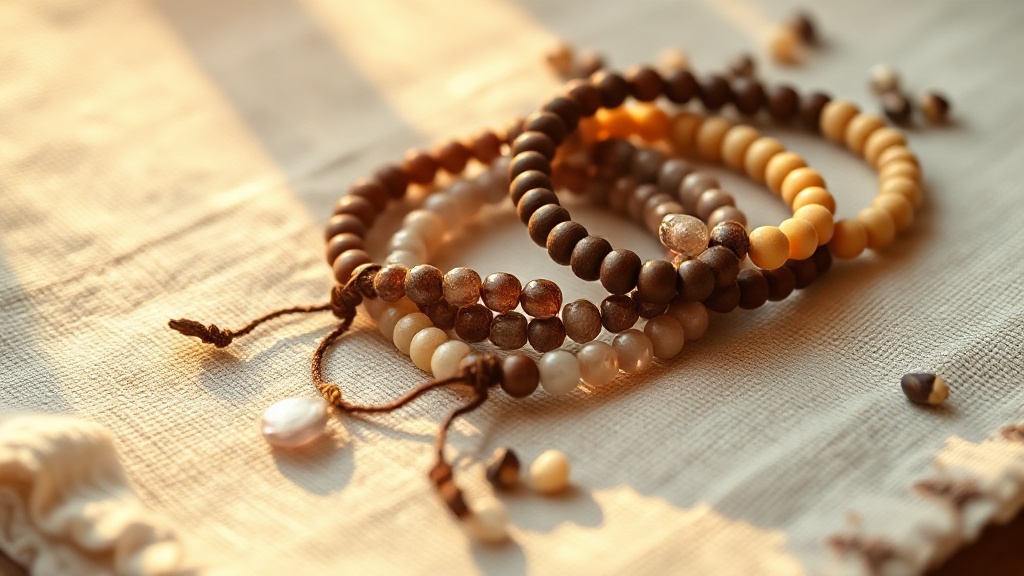
Bead Count Variants: 27, 21, and 18
The 27-bead wrist mala is the standard across Tibetan Buddhist, Theravada, and many Mahayana communities. But it is not the only count you will encounter.
21-bead malas appear frequently in Tibetan practice, particularly those associated with Tara *sadhanas*. The number 21 corresponds to the 21 Taras, a series of emanations of Arya Tara enumerated in texts going back to at least the 8th century. A mala designed specifically for Tara practice often carries 21 beads, sometimes with turquoise or green stone to reflect the iconographic color of Green Tara.
18-bead malas surface mostly in Chinese and Japanese Buddhist contexts, though they are less common than the 27 and 21 counts. Some Korean Buddhist traditions also use an 18-bead format for specific practices. In China, they are sometimes called *shǒuzhū* (手珠), literally "hand beads," underscoring their wrist-worn, portable nature.
💡 Did you know?
The word japa mala, used in both Hindu and Buddhist contexts, comes from the Sanskrit root jap, meaning to utter softly or repeat quietly. The practice of counting whispered or silent repetitions on beads predates Buddhism, with roots in Vedic ritual. When Buddhism spread north into Tibet and east into China, the counting bead practice was adapted rather than invented, absorbing local symbolic layers as it traveled.
| Bead Count | Tradition | Rounds to reach 108 | Common Use |
|---|---|---|---|
| 27 beads | Tibetan, Theravada, Mahayana | 4 rounds | General mantra counting, daily practice |
| 21 beads | Tibetan (Vajrayana) | Approx. 5 rounds | Tara practice, Green Tara sadhana |
| 18 beads | Chinese, Japanese, Korean | 6 rounds | Seated recitation, temple practice |
Materials: Wood, Seed, Stone, and Bone
The material of a wrist mala is not decorative incidental. Different schools have specific associations, and in some Vajrayana contexts the material is chosen to complement a particular deity practice. Here is what you will realistically find on the market, with accurate background on each.
Sandalwood and Rosewood
Sandalwood (Sanskrit: chandana) appears across Buddhist literature as an aromatic offering and a material associated with purity. Beads cut from sandalwood retain a faint scent for months, sometimes longer depending on density. The wood is native to South and Southeast Asia; genuine Indian sandalwood (Santalum album) has become expensive due to overharvesting, so most commercial sandalwood malas today use Australian sandalwood or a related species. Ask the seller to specify origin if it matters to you.
Rosewood malas are denser, darker, and more durable. They hold their shape well on an elastic cord and take handling well over years of use. In Tibetan Buddhist communities, rosewood does not carry the same scriptural prestige as sandalwood, but it is widely used and practically durable.
Bodhi Seed
Beads carved from the seeds of Ziziphus jujuba or from the nodes of the sacred fig tree (Ficus religiosa, under which the historical Buddha is said to have attained awakening) are collectively called Bodhi seed malas. They are common across Chinese Mahayana and Tibetan practice. The textured surface of the seed holds the fingers well during counting, and the natural irregular patterning means no two beads are identical.
Semi-Precious and Natural Stones
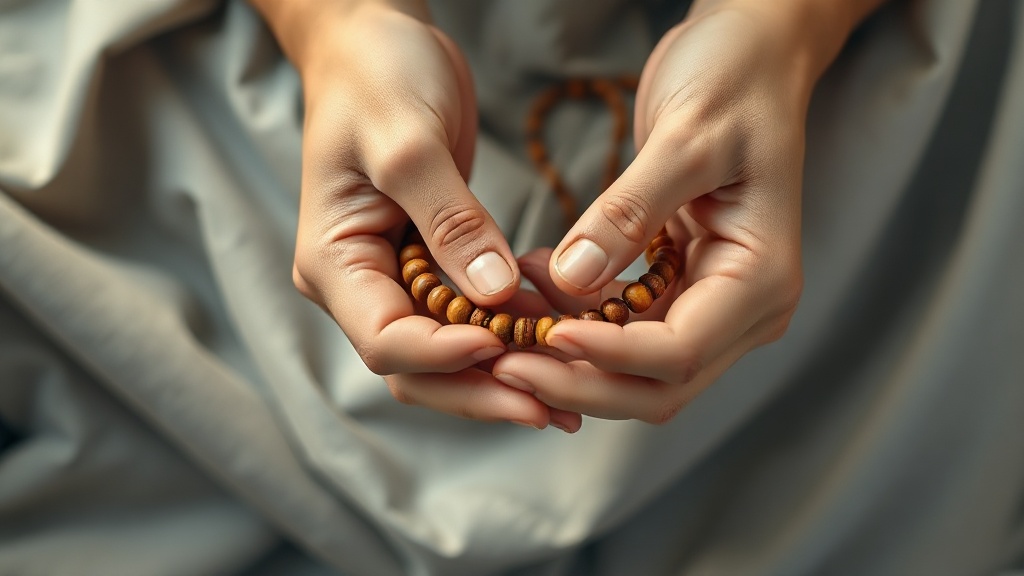
Stone malas are the most visually varied category. You will find beads in lapis lazuli, turquoise, carnelian, black onyx, clear quartz, amethyst, tiger's eye, and many others. In the Tibetan tradition, each stone carries symbolic associations rooted in the iconography of specific deities: turquoise is connected to prosperity and protection in Tibetan cultural belief; lapis lazuli is associated with the Medicine Buddha (*Sangye Menla*), whose body is described in the *Bhaisajyaguru Sutra* as having the color of lapis.
A note that belongs here clearly: the qualities attributed to stones in these traditions are symbolic and spiritual, not therapeutic. The qualities attributed to stones belong to spiritual traditions and beliefs. No therapeutic effect is scientifically recognized. These objects are not substitutes for medical advice or treatment. You can appreciate the cultural significance of turquoise in Tibetan Buddhist practice without asserting that wearing it will improve your health.
Yak Bone and Imitation Bone
Bone malas, often described as "yak bone" or "white bone," appear frequently in Vajrayana Tibetan practice. They carry a specific doctrinal resonance: bone malas are associated with practices of contemplating impermanence, and with certain wrathful deity cycles. Genuine yak bone malas are carved and polished by hand, often in Nepal. Many commercially sold "bone" malas are made from resin or synthetic ivory alternatives; a seller describing a mala as "imitation bone" or "resin" is being accurate, not inferior.
The Guru Bead: Function and Meaning
Nearly every mala, wrist or full-length, includes a single bead set apart from the main count. This is the guru bead (sometimes called the sumeru bead in certain traditions, or simply the head bead). It is larger, a different shape, or separated by a knot or tassel. Its role is structural: it marks the beginning and end of a complete round of counting.
The convention across most traditions is clear: when your fingers reach the guru bead, you do not cross it. You reverse direction and count back the way you came. In Tibetan practice, one explanation for this is that crossing the guru bead would symbolically "cross" the teacher, a gesture of disrespect in a tradition where the student-teacher relationship is central. Whatever the doctrinal reasoning in your school, the practical instruction is consistent: reverse at the guru bead.
On many wrist malas, the guru bead is also the attachment point for a tassel, a pendant, or a simple decorative knot. These finishings are not purely ornamental. A well-tied knot on a wrist mala distributes stress on the cord evenly, extending the life of the piece considerably.
If your practice includes *ngondro* (Tibetan preliminary practices) or any deity practice with a prescribed accumulation count in the hundreds of thousands, keeping careful track of completed rounds at the guru bead is essential. Many practitioners use a small tally counter alongside their wrist mala for high-volume accumulations, relying on the bead count for in-session rhythm and the counter for total tracking.
How to Use a Wrist Mala for Mantra Practice
Using a wrist mala for recitation is straightforward to learn and takes consistent practice to internalize. The beads move through the fingers while the mind holds the recitation, which creates a tactile anchor for attention. When the mind drifts, the bead still moves, and that small physical sensation often serves as a gentle return signal.
Here is the basic method used across most traditions:
- Hold the mala in the right hand. The guru bead rests between your thumb and index finger, or hangs below the hand depending on how you hold it.
- Start the first bead after the guru bead. With each recitation of the mantra (or breath, or name), push the bead away using the thumb, moving toward the next bead.
- Continue until you reach the guru bead again. That completes one round of 27 recitations.
- Reverse direction for the next round. Do not cross the guru bead.
- Four complete rounds equal 108 recitations, the full traditional count.
In Tibetan Vajrayana practice, specific mantras require specific hand positions and specific counts, and these details should ideally come from a qualified teacher. For beginners outside a specific lineage, the method above is consistent with general Buddhist custom and is a reliable starting point.
Some practitioners wear the wrist mala continuously throughout the day and pick it up for counting as moments allow, on a bus, during a break, in quiet moments between activities. The portability of the wrist mala for daily practice is part of what makes it useful in a way that a full 108-bead mala, coiled in a bag, may not be.
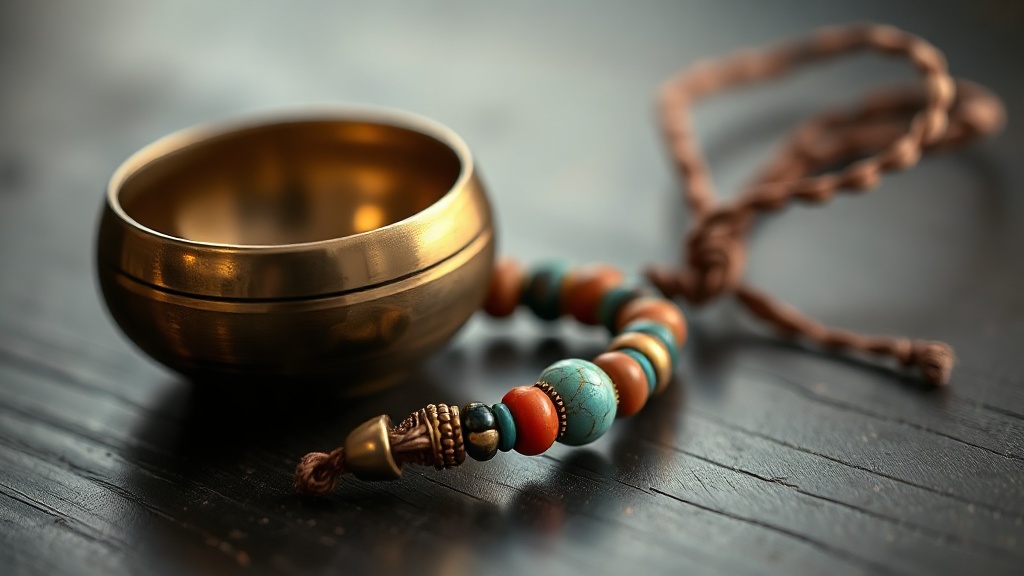
Wearing vs. Practicing: Two Ways to Relate to a Wrist Mala
There is a genuine question that comes up among practitioners: is it appropriate to wear a mala as jewelry, separate from active practice? The answer varies by tradition, and it is worth being honest about the range of views.
In strict Tibetan monastic contexts, a mala is a practice object. Some teachers advise against placing it on the ground, leaving it in unclean spaces, or lending it casually. It is treated with the same care as other Dharma objects. That said, wearing a mala on the wrist as a reminder of practice, or as a way to keep the object accessible for counting throughout the day, is different from wearing it purely as an accessory with no connection to the Dharma.
Many lay practitioners across all Buddhist traditions wear wrist malas throughout the day as a tangible reminder of their refuge vows and their practice commitments. This is not considered inappropriate. The object's purpose is served when it keeps the mind oriented toward the Dharma, whether through active counting or through its simple presence on the wrist.
If you come to a wrist mala as someone with no current practice and purely aesthetic interest, that is a different relationship. The object carries cultural weight regardless of your intention. Some practitioners prefer to keep a clear boundary between sacred practice objects and jewelry; others see no conflict. This is a question worth sitting with honestly.
For those who appreciate natural stone bracelets rooted in Buddhist and Tibetan traditions and want a piece that bridges daily wear with contemplative meaning, the collection below offers wrist-worn options in a range of materials and counts, including several that work as both bracelet and counting tool:

Caring for Your Wrist Mala
A mala cared for properly can last decades. The main stress points are the cord, the knots, and the beads themselves. Wood and seed beads are sensitive to prolonged moisture; take the bracelet off before swimming or bathing. Stone beads are durable but can chip if dropped on hard floors, and some stones (amethyst, for example) fade with sustained direct sunlight.
The cord, whether elastic, nylon, or silk, will weaken over time. Most wrist malas can be restrung at a bead shop or by someone with basic jewelry-making skills. If you have a mala that has been blessed or consecrated, restringing it with intention and care maintains the object's continuity across its physical repairs.
Wood beads can be periodically rubbed with a small amount of natural oil (jojoba or almond oil work well) to prevent drying and cracking. Wipe off any excess immediately. Do not apply oil to stone beads.
Storing the mala in a small cloth pouch when not in use keeps it clean and protects the cord from catching on surfaces. Some practitioners dedicate a small section of their altar or practice space to keeping their mala when it is not being worn or used.
"Even a single bead, held with sincerity, contains the whole of the Dharma."
A teaching commonly attributed to Tibetan teachers in the Kagyu and Gelug lineages, often said when practitioners question whether a short mala or brief practice counts.
Choosing a Wrist Mala That Fits Your Practice
A few concrete criteria make the choice clearer. Start with the tradition you are practicing within or drawn to. Tibetan Vajrayana practice has specific material recommendations that your teacher or the center you attend can clarify. Theravada practice has fewer restrictions on material and is more flexible. Zen and Chan traditions use malas but with less emphasis on specific counts and materials for wrist formats.
If you are a beginner with no current affiliation, a 27-bead mala in sandalwood, rosewood, or Bodhi seed is appropriate for any of the major Buddhist traditions. It gives you the right count, handles well, and will not require adjustment if you later commit to a specific lineage.
Fit matters practically. A wrist mala should sit snugly enough not to slide off but loosely enough to rotate easily during counting. Most wrist malas use elastic cord, which accommodates a range of wrist sizes. Adjustable cord versions with a sliding knot give more precise control.
Quality of craft is worth examining. Look for beads that are uniform in size (or intentionally varied in a way that reflects tradition, not inconsistent drilling), a cord that is not fraying at the guru bead, and knots that are tight and symmetrical. Malas made in Nepal, India, or Tibet by community cooperatives or traditional artisans tend to reflect higher standards of material sourcing and knotting technique than mass-produced items.
For those looking at a wrist mala as a gift: the gesture is appropriate and well-received among practitioners at any stage. A mala is a considered, respectful gift whether the recipient is a long-term practitioner or a sincere beginner. If you know their specific practice tradition, use that to guide material choice. If you do not, a 27-bead wooden mala with a simple finish is a safe and genuine option that suits every lineage. When the gift is paired with a complementary piece of gemstone jewelry, the combination can express both care and cultural understanding. The collection below includes necklaces, pendants, and bracelets selected for craftsmanship and grounding in Buddhist contemplative traditions:

You can also read more about how to choose a mala for different practice traditions or browse our full Meditation and Prayer collection for complementary objects to accompany a wrist mala gift.
FAQ
What is a wrist mala?+
A wrist mala, also called a mala bracelet or hand mala, is a shortened version of the traditional 108-bead mala used in Buddhist and Hindu recitation practice. Worn on the wrist, it typically contains 27 beads (one quarter of 108), made from materials such as sandalwood, Bodhi seed, rosewood, or natural stone. It serves as a portable counting tool for mantra recitation and as a tangible reminder of practice throughout the day.
How many beads does a wrist mala have?+
Most wrist malas have 27 beads, plus a guru bead. 27 is one quarter of 108, so four rounds on a wrist mala equal one full traditional count. Some traditions use 21-bead malas (especially for Tara practices in Tibetan Buddhism) or 18-bead malas (found in certain Chinese and Japanese Buddhist contexts). The guru bead does not count toward the total and is used as the reversal point between rounds.
Can a beginner use a wrist mala without a teacher?+
Yes. Using a wrist mala for simple breath counting, recitation of a widely known mantra such as Om Mani Padme Hum, or mindful repetition of the Three Refuges requires no special initiation for a lay practitioner. More complex Vajrayana practices do require transmission and instruction from a qualified teacher, and a mala used for those practices ideally should be introduced in that context. For general practice, picking up a wrist mala and starting with sincere intention is a legitimate beginning.
Which material is best for a first wrist mala?+
Sandalwood and rosewood are the most practical starting points. They are lightweight, durable, suitable across all major Buddhist traditions, and widely available in correctly crafted formats. Bodhi seed malas are also an excellent option, particularly for practitioners drawn to the symbolic resonance of the Bodhi tree. Stone malas are valid but carry more specific cultural and iconographic associations; they become a more meaningful choice once you have some background in the tradition you are practicing.
Is it appropriate to wear a wrist mala without doing practice?+
Views vary by tradition. In stricter Vajrayana contexts, mala beads are practice tools and carry expectations around respectful handling. Many lay practitioners across Theravada, Mahayana, and Vajrayana traditions wear their mala throughout the day as a reminder of practice, which is generally considered appropriate. Wearing a wrist mala with no connection to Buddhist practice at all is a separate matter, and one that practitioners of the tradition approach differently. Being honest with yourself about your relationship to the object is a reasonable place to start.
How do I care for a wrist mala long-term?+
Keep wood and seed beads away from prolonged moisture; remove the bracelet before bathing or swimming. Stone beads can chip on hard surfaces and some (such as amethyst) fade with extended direct sunlight. Rub wood beads periodically with a small amount of jojoba or almond oil to prevent cracking. Store the mala in a cloth pouch when not in use. Elastic cord weakens over time and can be replaced by a bead shop or anyone with basic stringing skills, without disrupting the sanctity of the object.


