

How to Consecrate a Mala: A Step-by-Step Guide Rooted in Buddhist Tradition
A new mala arrives in your hands as a physical object: seeds, stone, wood, or bone, strung on cord, finished with a tassel or a guru bead. It has craft and material. What it does not yet have is orientation. Consecrating a mala is the act of giving it that orientation, binding it to your intention, your lineage, and your practice so that it functions as more than a counting tool.
This is not a magical operation. Across Theravada, Mahayana, and Vajrayana traditions, the logic of consecration is the same: attention shapes habit, and habit shapes the mind. When you deliberately dedicate an object to a purpose and reinforce that purpose through ritual and repetition, you condition your own response to it. The mala becomes a cue. Each time you pick it up, the body and mind already know what is expected of them.
The steps below draw on Tibetan practice (particularly the rab-gnas consecration framework), Theravada customs from Sri Lanka and Thailand, and general Buddhist principles that cut across schools. Where traditions differ, that difference is noted. You do not need to be an ordained practitioner to work through this process, though guidance from a teacher in your lineage is always preferable when one is available.
⭐ Key points to hold before you begin
- Consecration is an act of intention, not a one-time magical event. Its strength depends on your sincerity and ongoing practice.
- The process has three broad phases: purification, dedication, and activation through mantra or prayer.
- In Vajrayana, full consecration ideally involves a lama or at minimum the recitation of specific sadhana texts. In Theravada and Zen contexts, the process is simpler but no less deliberate.
- A consecrated mala is ideally kept for personal practice only: lending or sharing it is generally discouraged once it has been dedicated.
- The material of your mala matters: different traditions associate specific beads (rudraksha, bodhi seed, crystal, bone) with particular deities, mantras, or practices.
What Consecration Actually Means in Buddhist Context
The Pali and Sanskrit vocabulary around consecration covers several overlapping concepts. The Tibetan term rab-gnas (literally "excellent abiding") refers to a formal empowerment ceremony for statues, thangkas, and ritual objects that invites a Buddha's or bodhisattva's qualities to "abide" within the object. It is not that the object becomes a deity; rather, it becomes a recognized support for practice, a vessel the mind can orient toward reliably.
For a mala, the ceremony is typically simpler than a full rab-gnas performed for a temple statue. Think of it as a focused intention-setting supported by purification and mantra repetition. Theravada monks in Thailand and Sri Lanka often bless malas by chanting paritta (protective suttas from the Pali Canon) over them, particularly passages from the Ratana Sutta or the Karaniya Metta Sutta. The purpose is identical: aligning the object with the Dharma and with the practitioner's sincere resolve.
💡 Did you know?
The earliest known reference to counting beads in a Buddhist context comes from a sutra often called the Mokugenji Sutra (木槵子経), in which the Buddha is said to have instructed King Virudhaka to string 108 seeds of the mokugenji tree and recite the Three Jewels formula while passing each bead. Scholars date this text to around the 4th or 5th century CE, though the practice itself is likely older. The number 108 corresponds to the 108 kleshas (mental afflictions) enumerated in Abhidharma literature.
Choosing the Right Mala for Your Practice
Before the consecration can be meaningful, the mala should fit the practice you intend to build around it. This is not about aesthetics alone. The right material grounds the dedication and keeps the symbolic logic of your practice coherent from the first bead to the last.
In Tibetan Vajrayana tradition, the Guhyasamaja Tantra and related texts prescribe specific materials for specific deity practices. Rudraksha seeds are broadly associated with Shaivite and some Vajrayana practices. Bodhi seed malas carry a direct symbolic connection to the Bodhi tree under which Shakyamuni attained liberation. Crystal or clear quartz malas are often recommended, according to Tibetan Buddhist tradition, for practices associated with Avalokiteshvara (Chenrezig). Bone or skull-bead malas appear in wrathful deity practices and should not be used casually without initiation.
Note on gemstones and crystal beads: The qualities attributed to specific stones (such as crystal for clarity or compassion practices) belong to spiritual traditions and cultural beliefs. No therapeutic or physiological effect is scientifically recognized. Choose your mala material based on your tradition's guidance and your own sincere intention, not on claims of intrinsic healing properties.
For practitioners without a specific deity yoga practice, a sandalwood or rosewood mala is a clean, broadly appropriate choice. If you work within a Zen or Theravada framework, the material question is generally less prescribed: sincerity of use matters more than symbolic correspondence.
Once you have selected the mala that fits your practice, the next step is finding beads whose materials and craftsmanship you trust. The collection below brings together natural stone and seed malas rooted in Buddhist craft traditions, each ready to be dedicated to your own practice.

Phase One: Purification Before Consecration
Purification removes what Tibetan teachers call dag-gyen, meaning residual impressions left by previous handling, manufacturing environments, or simply the neutral state of an unused object. It is preparatory, not the consecration itself. Three methods are standard across traditions.
Water Cleansing
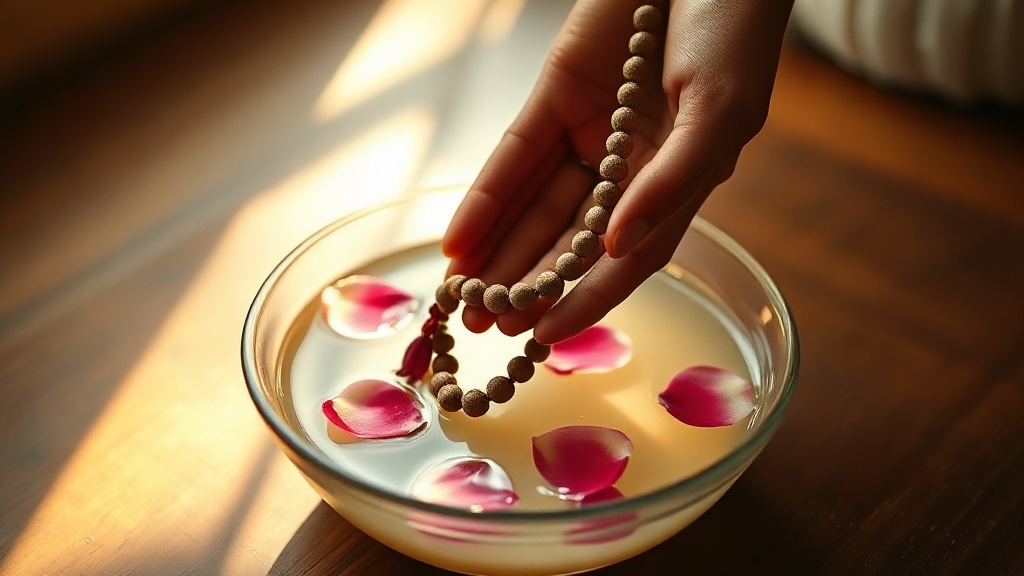
Rinse your mala briefly under clean running water, or hold it over a bowl of water to which a small amount of saffron or salt has been added, depending on your tradition. As you do this, recite the mantra OM AH HUM three times, which in Vajrayana practice purifies the object at the level of body, speech, and mind. Pat dry gently with a clean cloth. Do not submerge malas strung on silk cord or those containing sensitive stones: a brief pass of the mala through incense smoke works equally well as a physical substitute.
Incense Purification
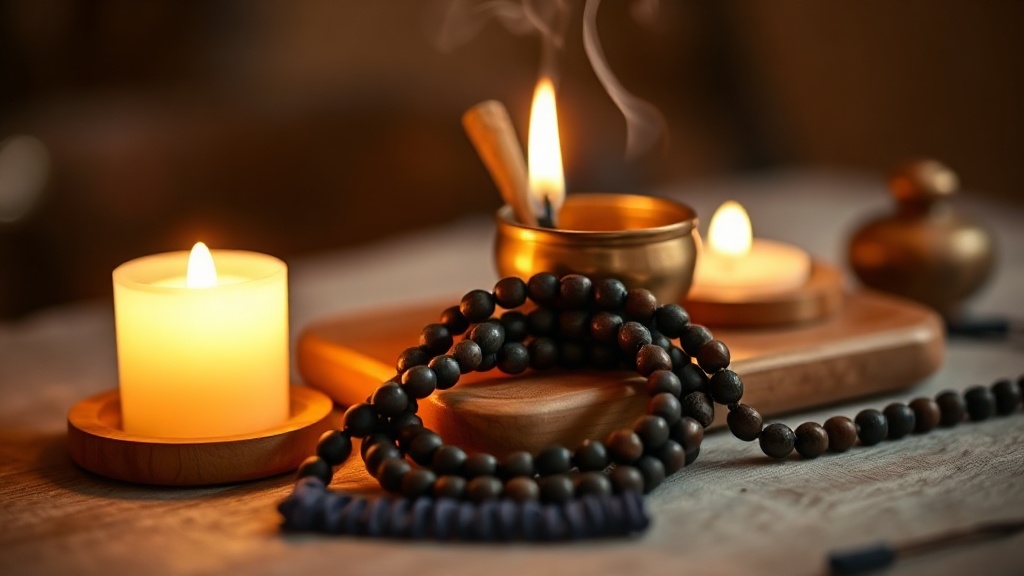
Pass the mala three times through the smoke of incense. Sandalwood or juniper are the most commonly used in Tibetan practice. In Thai forest tradition, monks sometimes use the smoke of specific medicinal woods. The act symbolizes the purification of speech and the environment surrounding the object. This step is also practical: it leaves the beads with a neutral, clean scent, which matters if the mala previously absorbed perfume or cooking odors.
Sunlight Exposure
Place the mala in direct morning sunlight for one to three hours. This is a lighter, supplementary step rather than a standalone purification method. In some Tibetan schools, sunlight is associated with the quality of discriminating wisdom (prajna). It also has a mild practical effect on organic bead materials like wood and seed, helping them stabilize before use.
Phase Two: Setting the Dedication (Intention)
This is the phase most practitioners skip or treat too quickly, and it is arguably the most important. Consecrating a mala without a clearly held intention is like signing a blank document.
Sit quietly in front of your altar, or simply in a clean, undisturbed space. Hold the mala between your palms at chest height, in the gesture known as anjali mudra. Take three deliberate breaths. Then articulate, either aloud or with firm internal clarity, exactly what practice this mala will support.
Be specific. "General meditation" is less useful than "recitation of the Vajrasattva hundred-syllable mantra" or "daily Metta practice during morning sitting." Specificity is not rigidity: you can expand your practice later. But at the moment of dedication, the more precisely you name the purpose, the more the act of picking up the mala will trigger that specific mental state going forward.
Many practitioners also include, at this stage, a brief aspiration in the spirit of the Bodhisattva vow: that whatever merit or clarity arises from this practice be for the benefit of all sentient beings. This framing is optional for Theravada practitioners but standard in Mahayana and Vajrayana contexts.
"Whatever wholesome deeds I have done, may all beings share in this merit."
Traditional transference of merit formula, used across Theravada and Mahayana contexts after any practice or ritual act.
Phase Three: Activation Through Mantra Recitation
This phase is what most people picture when they think of consecrating a mala: the formal recitation that orients the beads to a specific practice. The logic here is straightforward. Mantra activation for mala consecration works by establishing a pattern of association between the physical beads and a specific vibratory, mental, or symbolic field. Repeated contact between hand, bead, and mantra deepens that association with every subsequent session.
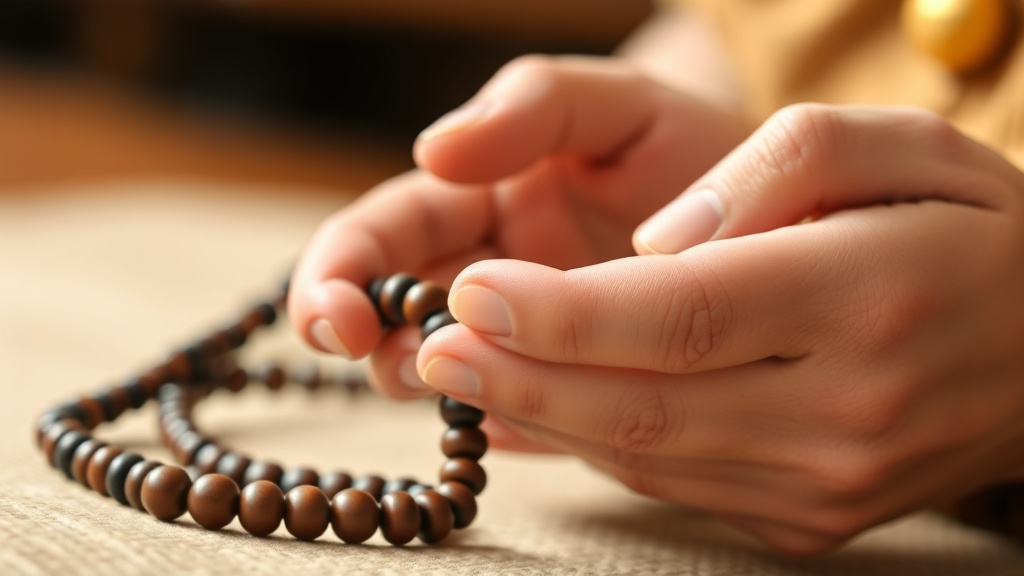
The minimum threshold varies by tradition. In Tibetan practice, completing one full mala (108 repetitions) of your chosen mantra while holding the beads is the baseline. Many teachers recommend doing this three times over three consecutive days, or completing 1,000 repetitions spread across multiple sessions, before the mala is considered fully consecrated. In Theravada contexts, the guidance is often simpler: the beads are blessed by a monk or elder reciting protective suttas, or the practitioner recites the Three Jewels formula (Ti-sarana) 108 times while passing each bead.
Which Mantra to Use
Use the mantra associated with your specific practice. If you have received initiation into a deity yoga practice, use the root mantra of that yidam. If you work with Chenrezig (Avalokiteshvara), use OM MANI PADME HUM. For Manjushri practices, OM AH RA PA TSA NA DHI. For Vajrasattva purification, the hundred-syllable mantra or its short form OM VAJRASATTVA HUM.
If you have no specific deity practice and are approaching this as a beginner, reciting the Three Refuges formula in your language, or simply OM MANI PADME HUM, is entirely appropriate. The most important quality is sincerity and stability of attention, not the technical prestige of the mantra chosen.
The Role of a Lama or Teacher in Vajrayana Consecration
For practitioners in the Tibetan Vajrayana lineages, having a qualified lama breathe on the mala, recite the appropriate mantra, and formally bless it is the gold standard. This is not a gatekeeping rule: it reflects the Vajrayana understanding that transmission requires a living chain of connection back to the original teachings. A lama who has completed extensive retreat practice with a specific deity brings a different quality of activation than a beginner working alone.
If you have access to a teacher, a Dharma center, or a visiting lama's blessing ceremony, bringing your mala to that occasion for a brief blessing is far preferable to solo consecration. Many Tibetan Buddhist centers offer open blessing ceremonies where lay practitioners can bring objects for consecration. Check with your local meditation and prayer community for such opportunities.
Working alone does not make the process invalid. It means you take on full responsibility for the sincerity and continuity of the practice. Self-consecration is recognized in many texts, including instructions found within the Kagyu and Nyingma traditions for practitioners in isolated circumstances.
How to Maintain a Consecrated Mala
Consecration is not permanent in the sense that it cannot be undone by neglect. How you treat the mala after the ceremony matters as much as the ceremony itself. The table below summarizes the handling conventions you are most likely to encounter across traditions.
| Situation | Recommended handling | Tradition |
|---|---|---|
| Storing the mala | Wrap in a clean cloth (silk or cotton) and keep on your altar or in a dedicated pouch. Not in a pocket with keys or coins. | Tibetan, Theravada |
| Placing the mala | Never place it directly on the floor or in the bathroom. Keep above waist level when stored. | Tibetan |
| Sharing or lending | Once consecrated for personal practice, do not lend the mala to others. It is considered to carry your personal karmic imprint. | Tibetan, Chinese Buddhist |
| Wearing as jewelry | Acceptable in many traditions (especially Thai, Tibetan). Avoid wearing it during activities considered incompatible with Dharma practice. | Thai, Tibetan |
| Re-consecrating | If the mala breaks or has been long neglected, repeat the purification and dedication phases before resuming practice. | All schools |
Practical wear matters too. Wooden and seed malas benefit from occasional conditioning with a tiny drop of natural oil (cedar or sandalwood oil) rubbed in with a cloth. Stone malas need less maintenance but should not be left in prolonged direct sunlight, as some stones fade over time. A mala that is physically cared for tends to be psychologically respected, which reinforces the habit of treating practice time as distinct and deliberate.

When a Mala Breaks: What Tradition Says
A mala breaking during or between practice sessions is something many practitioners encounter and often worry about. The Tibetan interpretation varies by teacher, but the most grounded and consistent teaching is practical rather than ominous: check the cord quality before it snaps, re-string every year or two if you use the mala daily, and re-consecrate after re-stringing.
Some Tibetan teachers suggest that a mala breaking at a significant moment may indicate the mala has "absorbed" something and should be retired or offered to a stupa. Others treat it entirely as a cord tension issue. Neither reading is universal doctrine. What all traditions agree on is this: a broken mala should not simply be thrown away. If it cannot be re-strung, the beads can be offered at a temple, placed inside a stupa offering, buried in clean earth near a sacred site, or burned respectfully.
If you re-string the mala yourself, the re-consecration process is shorter than the original. A purification pass through incense smoke, three recitations of OM AH HUM, and one full mala of your regular mantra is sufficient to restore the dedication in most Tibetan and Chinese Buddhist frameworks.

Building the Altar Space That Supports the Practice
Consecrating a mala in a cluttered, distracted environment is not impossible, but it works against you. The physical space you use for practice is itself a support structure. Even a small corner of a room, with a clean cloth, a lamp, and a statue or image, signals to the body that what happens here is different from what happens everywhere else.
This is not about spiritual decoration for its own sake. It is applied psychology grounded in millennia of contemplative observation. Your Buddhist decor and altar objects serve as environmental anchors, reducing the effort needed to drop into a practice state. The easier it is to begin, the more consistent the practice becomes. Consistency is what makes consecrating a mala meaningful over time, because the ceremony is a beginning, not a guarantee.
A lit lamp is particularly useful during the ceremony itself. In both Tibetan and Theravada traditions, offering light is one of the five classical altar offerings (along with water, incense, flowers, and food). The lamp is not decorative: it marks the session as intentional and distinct. Even a simple meditation and prayer space with a single lamp and your mala is sufficient to create the conditions for a sincere consecration.
Over weeks and months, the cumulative effect of this structure becomes tangible. The body learns to shift into a quieter register the moment you unwrap the mala from its cloth. That shift is not supernatural. It is the fruit of deliberate, repeated association; and it is precisely what consecration is designed to cultivate.
FAQ
Do I need a Buddhist teacher to consecrate my mala?+
A teacher is recommended in Vajrayana traditions, where transmission from a qualified lama significantly deepens the practice. In Theravada and general Mahayana contexts, a sincere self-consecration following the steps of purification, dedication, and mantra recitation is considered valid. If you have access to a local Dharma center or visiting teacher, bring your mala for a formal blessing when the opportunity arises.
How long does it take to consecrate a mala?+
A basic consecration covering all three phases (purification, dedication, and one full round of mantra recitation) can be completed in a single focused session of 30 to 60 minutes. Many Tibetan teachers recommend extending the activation phase across three consecutive days, completing one full mala of 108 recitations each day. For a deeper consecration oriented toward a specific deity practice, completing 1,000 recitations spread across multiple sessions is the more common standard. There is no fixed rule: quality of presence matters more than clock time.
Can I consecrate a mala alone, without a ceremony or community?+
Yes. Self-consecration is recognized across Tibetan Kagyu and Nyingma texts, particularly for practitioners in isolated circumstances. The Theravada tradition similarly allows lay practitioners to bless and dedicate objects through sincere recitation of the Three Refuges and the Five Precepts. What you cannot replicate alone is the transmission that flows from a teacher who has completed the practice themselves; but a solo consecration performed with full sincerity is by no means invalid or without effect.
Can I use any mantra for the activation, or does it need to match the mala material?+
In Tibetan Vajrayana, specific materials are matched with specific deities and mantras (for example, crystal with Chenrezig and OM MANI PADME HUM, according to traditional correspondence). Outside of formal deity yoga, this correspondence is a recommendation rather than a strict rule. Use the mantra of the practice you are dedicating the mala to. If you have no specific mantra practice, OM MANI PADME HUM or a simple recitation of the Three Refuges is appropriate for any material.
Can I consecrate a mala that was given to me as a gift?+
Yes, and a gifted mala often carries additional significance because of the intention behind the gift. Run through the purification phase first (water or incense cleansing, or both), then proceed with your own dedication and activation. The fact that another person selected the mala for you does not interfere with its consecration to your practice.
Is there a difference between consecrating a mala and simply blessing it?+
Functionally, yes. A blessing (such as a monk chanting over the beads) introduces a general protective or auspicious quality to the object. Consecration is more specific: it formally dedicates the mala to a particular practice, deity, or aspiration. A blessed mala is appropriate for wearing or gifting. A consecrated mala is oriented toward a specific practice and treated accordingly. Many malas receive both: a formal blessing first, then a personal consecration by the practitioner.


