

Mahakala: The Wrathful Protector at the Heart of Vajrayana Buddhism
Who Is Mahakala? A Protector Unlike Any Other
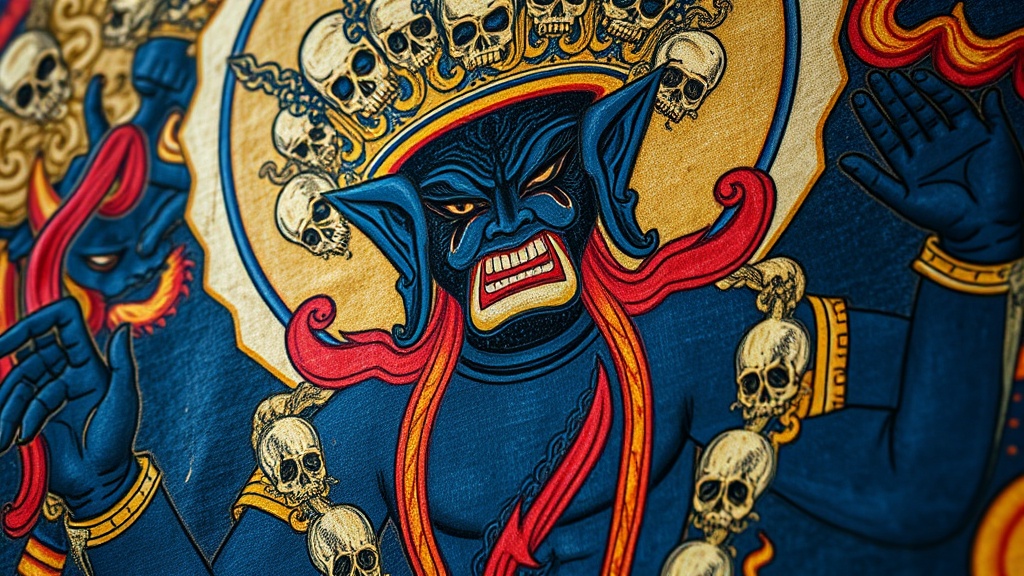
Mahakala is one of the most recognizable and least understood figures in Vajrayana Buddhism. Dark blue or black-skinned, crowned with skulls, wreathed in flames, carrying a curved knife and a skull cup: his appearance is deliberately overwhelming. That is the point. Within Tibetan, Mongolian, Nepali, and Japanese Buddhist traditions, he stands as the supreme Dharmapala, a guardian of the Buddhist teachings whose ferocity is not aggression but an instrument of liberation.
His name comes from Sanskrit. Maha means great; kala means time or black. Together the name carries two meanings simultaneously: the Great Black One, and the one who is beyond time itself. Both readings are intentional and neither cancels the other.
For practitioners across the Kagyu, Gelug, Sakya, and Nyingma schools of Tibetan Buddhism, Mahakala is not a demon to be feared. He is a protector to be propitiated, a force that clears obstacles on the path to awakening. Understanding who he is requires stepping outside a Western frame where fierce iconography defaults to evil.
⭐ Key points
- Mahakala is a Dharmapala, a protector of the Buddhist Dharma, not a demonic figure
- He appears in at least 75 distinct iconographic forms across different schools and lineages
- His roots span both Hindu Shaiva tradition and Buddhist tantra, with a complex historical synthesis
- Wrathful appearance in Vajrayana serves a specific purpose: to cut through ego, delusion, and obstacles
- He is venerated in Tibet, Mongolia, Japan (as Daikoku-ten), Nepal, and Bhutan
Roots in Hindu and Buddhist Tantra
Mahakala's origins are layered. In Hindu tradition, the name Mahakala refers to an epithet of Shiva in his destructive, time-dissolving aspect. Shiva as Mahakala appears at Ujjain, one of the twelve Jyotirlinga sites in India, and the connection to cosmic time and death runs deep through that lineage.
Buddhist tantra absorbed and transformed this figure, a process that scholars date to somewhere between the 7th and 10th centuries CE across the Indian subcontinent and early Himalayan regions. The absorption was not passive imitation. Buddhist philosophers reframed Mahakala's destructive force as the annihilation of ignorance and the klesha (mental afflictions), not the destruction of persons. What Shaivism read as Shiva consuming the universe, Vajrayana read as the wrathful cutting of delusion at its root.
The earliest textual sources locating Mahakala within a distinctly Buddhist framework appear in the context of Chakrasamvara tantra literature, where he serves as a protector of the mandala and an oath-bound defender of practitioners. From there, his role expanded across the Himalayan plateau as Tibetan Buddhism systematized its protector cults between the 11th and 14th centuries.
💡 Did you know?
The Mahakalatantra, a root text dedicated specifically to Mahakala's propitiation, was among the works translated into Tibetan during the second dissemination of Buddhism (the Chidar period, roughly the 10th to 12th centuries). Versions of these translations are preserved in the Tibetan Buddhist Canon, the Kangyur and Tengyur.
The Many Forms of Mahakala: Iconography Across Lineages
No single image captures Mahakala. Depending on the school, the ritual lineage, and the specific protective function being invoked, he appears in forms ranging from two arms to six, from solitary figures to complex mandalas of retinues. Counting all recognized forms across the major schools, traditional sources cite more than 75 distinct emanations.
Two-Armed Mahakala (Bernagchen)
The two-armed form, called Bernagchen in Tibetan, is the principal protector of the Kagyu school. He stands upright, black-skinned, holding a curved knife (trigug or kartrika) in the right hand and a skull cup (kapala) filled with blood in the left. His crown is made of five dry skulls. He wears a tiger-skin skirt and an elephant-skin cloak. Flames surround his entire body. This is the form most commonly depicted in Kagyu monastery protector chapels (gonkhang). In the Vajrayana symbolic register, the blood held in the kapala represents the four maras, the forces that obstruct liberation, which the protector has fully consumed and neutralized. This is doctrinal imagery, not literal description.
Four-Armed Mahakala (Chaturvuja)
The four-armed form, Chaturvuja Mahakala, is particularly prominent in the Sakya tradition. His four arms carry the curved knife, skull cup, trident, and a hand drum (damaru). The additional implements expand the symbolic range: the trident represents mastery over the three poisons (greed, aversion, delusion), while the damaru connects to sound as a vehicle of awakening.
Six-Armed Mahakala (Shadbhuja)
The six-armed Mahakala is central to the Gelug school and is closely associated with Je Tsongkhapa's lineage. This is perhaps the form most widely reproduced in art produced for Western practitioners. His six arms carry a curved knife, skull cup, trident, hand drum, lasso, and a three-pointed staff. He stands on two figures representing ego-clinging and obstructing forces. The Gelug explanatory texts, particularly those compiled by the First Panchen Lama, detail the meditational instructions (sadhana) associated with this form.
Panjarnata Mahakala: Protector of the Hevajra Tantra
Panjarnata Mahakala, the "Lord of the Pavilion," is oath-bound specifically to protect practitioners of the Hevajra Tantra, one of the foundational Mother Tantras of the Sarma (New Translation) schools. He appears in a standing posture with six arms, his body dark blue, surrounded by an entourage of eight yoginis. Sakya monastery at Muktinath in Nepal maintains one of the older continuous ritual lineages for this form.
Mahakala as Daikoku-ten in Japan
The transmission of Mahakala into Japanese Buddhism produced one of the most striking transformations in Buddhist iconographic history. Arriving via Chinese esoteric Buddhism (Mikkyo), Mahakala merged with a Japanese deity of the kitchen and wealth called Daikoku, eventually producing Daikoku-ten: a smiling, round-faced god standing on bales of rice and holding a magical mallet. He is counted among the Seven Lucky Gods (Shichifukujin). The fierce wrathful deity and the cheerful household god share the same Sanskrit name, separated by centuries of cultural translation.
| Form | School / Tradition | Arms | Key Attributes |
|---|---|---|---|
| Bernagchen | Kagyu | 2 | Curved knife, skull cup, skull crown |
| Chaturvuja | Sakya | 4 | Knife, skull cup, trident, damaru |
| Shadbhuja | Gelug | 6 | Knife, skull cup, trident, damaru, lasso, staff |
| Panjarnata | Sakya / Hevajra lineages | 6 | Six arms, entourage of eight yoginis |
| Daikoku-ten | Japanese Mikkyo / Shinto-Buddhist | 2 | Magical mallet, bales of rice, smiling aspect |
Reading the Symbols: What Each Element Means
Every detail of Mahakala's iconography carries specific doctrinal weight. Nothing is decorative in the ornamental sense. Each implement, each color, each garment communicates a precise teaching.
The Black or Dark Blue Skin
The color is not incidental. In Vajrayana color symbolism, black absorbs all colors without distinction, representing the all-encompassing, non-discriminating nature of ultimate awareness. Some texts specify dark blue rather than black, linking Mahakala to the dharmakaya, the truth body of a Buddha, which in certain tantric color schemas is represented by deep blue or indigo. He is also described as the color of the night sky at the moment before dawn.
The Crown of Five Skulls
The five dry skulls represent the transformation of the five poisons (ignorance, attachment, aversion, pride, jealousy) into their corresponding five wisdoms. This is a core Vajrayana teaching: afflictions are not merely suppressed but transmuted into insight. The skull crown makes that transmutation visible in a single glance.
The Curved Knife (Trigug / Kartrika)
The curved flaying knife cuts through ego-clinging at its root. In ritual texts, it is described as severing the stream of conceptual thought that keeps beings bound in samsara. The hook shape means it also draws practitioners close to the Dharma, pulling them away from distraction.
The Skull Cup (Kapala)
Filled, in the symbolic register of Vajrayana doctrine, with the blood of the four maras (the forces that obstruct liberation), the skull cup represents the complete consumption and neutralization of obstacles. It also connects to offerings made in charnel ground practice, an ascetic context important to the development of many Tantric lineages across India and Tibet. Charnel ground settings, which refer to traditional cremation sites, functioned as locations where practitioners confronted impermanence directly; they are a doctrinal and historical reference, not a prescription for contemporary behavior.
The Flaming Aureole (Prabhamandala)
The ring of flames surrounding his body is called the fire of pristine awareness (jnanagni). According to Vajrayana doctrine, it consumes karma and obscurations. Thangka painters spend considerable time on this element because its rendering carries specific ritual requirements outlined in the sadhana texts.
Mahakala's Role as a Dharmapala: How Protector Veneration Works
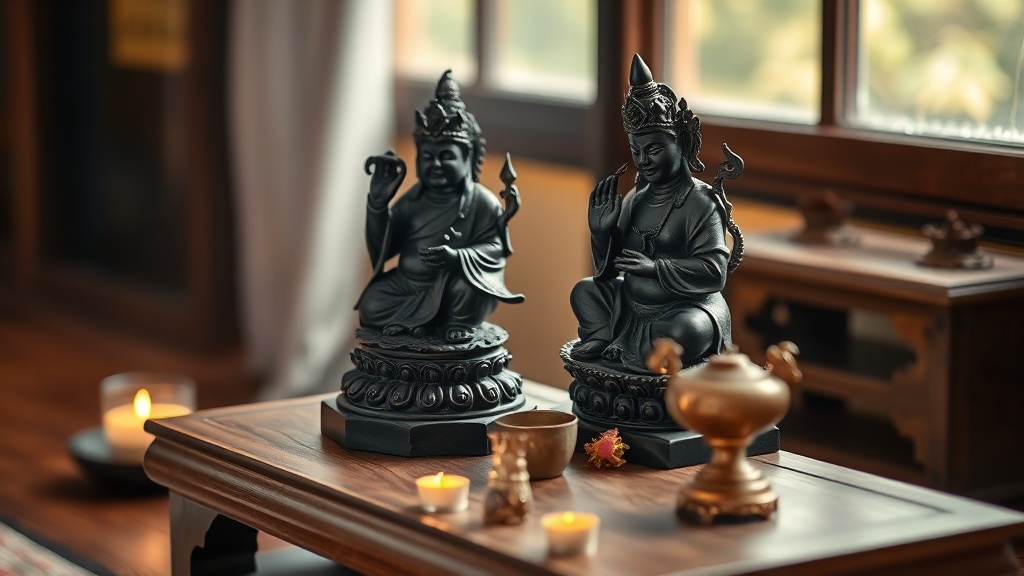
In Vajrayana Buddhism, Dharmapalas occupy a specific ritual category. They are not Buddhas or bodhisattvas in the conventional sense, though some protectors are understood as emanations of bodhisattvas. Mahakala is often described as a wrathful emanation of Avalokiteshvara, the bodhisattva of compassion, in this Tibetan tradition. Their function is protective: they guard the Dharma, the community of practitioners (Sangha), and the individual practitioner's path.
Propitiation of Mahakala follows set ritual structures. In monastery settings, a dedicated protector chapel, the gonkhang, houses his image separately from the main shrine hall. Access to the gonkhang is often restricted, particularly to those who have received the relevant empowerment (wang) and transmission (lung). This is not superstition but a recognition that ritual context shapes the psychological effect of the practice.
The primary daily practice for Mahakala propitiation involves a sadhana, a structured sequence of visualization, mantra recitation, and offering. The Mahakala mantra most widely transmitted in Tibetan lineages is: Om Shri Mahakala Hum Hum Phat Svaha (there are lineage-specific variants). The practice begins with taking refuge, generating bodhichitta (the mind of awakening), and only then invoking the protector, always in the context of benefiting all beings, not personal protection alone.
"The Dharmapalas are like the immune system of the Dharma. They do not produce awakening themselves; they create the conditions in which awakening can occur undisturbed."
A common teaching framework used by Kagyu and Gelug teachers when introducing protector practice
💡 Did you know?
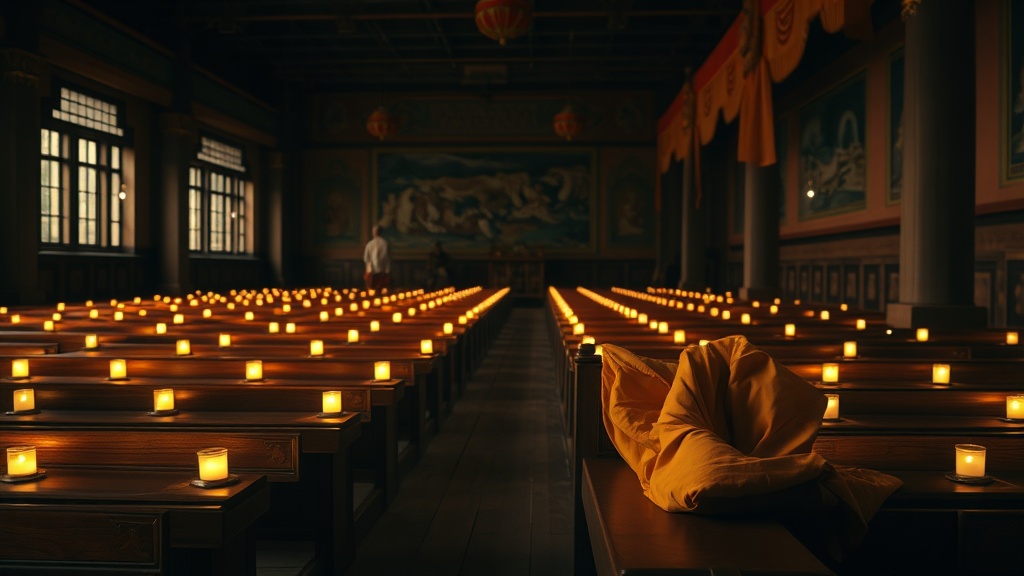
In major Tibetan monasteries, the gonkhang protector chapel is opened for group practice before dawn on specific calendar days, particularly on the 29th day of the Tibetan lunar month. On those occasions, monks perform an elaborate torma offering ritual that can last several hours, often by lamplight. The timing connects to the belief, in that tradition, that protector activity is especially potent at the boundary between one lunar cycle and the next.
Mahakala Across Buddhist Cultures: Tibet, Mongolia, Japan, and Beyond
Tibet
In Tibet, Mahakala is inseparable from the history of the major lineages. The Karma Kagyu school credits Mahakala with guiding the recognition of successive Karmapas, and his image is prominently displayed at Rumtek Monastery in Sikkim. The Gelug school, through Je Tsongkhapa's vision, received specific instructions for the six-armed form, which became central to Gelug protector practice. Sakya monastery maintains a Mahakala protector lineage dating to the 11th-century translator Drogmi Lotsawa.
Mongolia
When Tibetan Buddhism spread into Mongolia in the 16th and 17th centuries, Mahakala traveled with it. The Mongolian title Khan means king or great lord, and Mahakala was venerated as Gon-po, meaning "lord." The Erdene Zuu monastery, founded in 1586 at Karakorum, maintained Mahakala shrines as part of its founding endowment. Mongolian Mahakala iconography shows some distinctive stylistic features: bolder outlines, slightly different proportions, and a tendency toward more vivid application of the standard blue-black skin tones.
Japan
The Japanese reception of Mahakala, discussed above under Daikoku-ten, illustrates how dramatically a figure can transform across cultural translation without losing its core function. Daikoku-ten retained a guardian role and appears in temple kitchens and household shrines, a domestic protector whose origins in fierce Vajrayana practice are largely invisible to most Japanese worshippers today.
Nepal and Bhutan
Newar Buddhist communities in the Kathmandu Valley maintain some of the oldest continuous ritual traditions around Mahakala, including forms that predate the Tibetan systematization. At Swayambhunath, one of the oldest Buddhist sites in Nepal, Mahakala shrines are maintained by Vajracharya priests who perform daily fire offerings (homa) during ritual periods. Bhutan, whose state religion is Drukpa Kagyu, venerates Mahakala as one of the primary protectors of the kingdom itself.

Mahakala and Compassion: The Paradox of Wrathful Protectors
The hardest concept for newcomers to Vajrayana to understand is this: Mahakala as a wrathful protector is understood, in the Tibetan tradition, as an expression of compassion, not its opposite. The logic runs through the Mahayana understanding of skillful means (upaya). A doctor who removes a tumor uses instruments that cut. A teacher who confronts a student's laziness directly may seem harsh. The method is fierce; the motivation is care.
Tibetan teachers frequently make this point by contrasting peaceful and wrathful emanations. Avalokiteshvara in his peaceful white form and Mahakala in his ferocious black form are, in many Vajrayana frameworks, understood as the same compassionate energy operating through different functions. The peaceful form invites and soothes; the wrathful form clears and protects. Neither works without the other.
This is not a theological convenience. It reflects a systematic understanding of how obstacles arise on the path to awakening and what categories of response they require. Some obstacles recede through patient cultivation. Others require a more forceful energetic response. Protector practice addresses the second category.
Common Misunderstandings About Mahakala
"He is a demon" and why that framing fails
The "demon" reading projects a Western theological framework onto a figure it was never designed to contain. In Vajrayana, there is no cosmic evil principle equivalent to the Christian Satan. What exists are forces of delusion, obstacle, and obscuration. Mahakala opposes all of those, which places him firmly on the same side as the practitioner.
Confusing him with Yama (the Lord of Death)
Both figures are dark-skinned and appear in wrathful iconography, but they are distinct. Yama (Gshin-rje in Tibetan) is the judge and lord of the dead, who appears in Bardo Thodol teachings as the figure who weighs karma at the moment of death. Mahakala is a protector of the living path; Yama administers post-death transitions. Their ritual contexts, mantras, and sadhana structures are entirely different.
Treating his image as a luck charm
Mahakala's image without proper context, transmission, and practice is simply an image. Placing a Mahakala thangka or statue in a space does not automatically invoke his protection in any traditional sense. In the Vajrayana framework, the relationship between practitioner and protector is established through empowerment, study, and sustained practice, not through possession of an object. That said, a Mahakala image in a contemplative space can serve as a meaningful reminder of the Dharma's protective depth, provided it is treated with appropriate respect.

Thangka Painting and Mahakala: An Art Form With Strict Rules
The production of a Mahakala thangka is not a free artistic exercise. Traditional Tibetan thangka painting follows precise iconometric manuals called kadpe (measurement texts) that specify proportions, color values, hand gestures (mudra), and spatial relationships to the millimeter. These manuals trace back to Indian Buddhist aesthetic treatises and were codified in Tibet through figures like Menthangpa Menla Dhondrup in the 15th century.
A properly executed Mahakala thangka requires the painter to maintain a ritual state throughout the process: clean precepts, daily offerings, and recitation of the relevant mantra during painting sessions. Many traditional painters begin at dawn after a purification ritual. The finished thangka is then consecrated (rabne) by a qualified lama before it is considered ritually active in that tradition.
Mineral pigments ground from natural stones, including lapis lazuli for blue tones, malachite for green, and cinnabar for red, were used in classical thangkas. Modern Tibetan painters working in the classical tradition still prefer natural pigments where available, though prepared mineral colors are now common. The background flames in a Mahakala thangka are typically rendered in graduated reds, oranges, and yellows applied in multiple translucent layers, a technically demanding process that can take weeks on a single composition.
For those interested in the Buddhist wall art and hanging traditions, thangkas represent the most doctrinally precise end of a broad spectrum that includes mandalas, deity paintings, and protective symbols.
Mahakala Sadhana Practice: A Framework for Serious Practitioners
The formal sadhana practice for Mahakala is Vajrayana, which means it falls within the category of teachings that require empowerment from a qualified lineage holder before they can be formally undertaken. This is not gatekeeping; it is a recognition that certain practices require a stable container and clear instruction to be approached responsibly.
That said, a general outline of how protector sadhana works helps practitioners understand what they are encountering when they sit in on monastery rituals or read translated texts.
- Taking refuge and generating bodhichitta: Every Vajrayana practice begins here. Refuge in the Three Jewels (Buddha, Dharma, Sangha) and the intention to practice for the benefit of all beings are the foundation that prevents the protector from becoming simply a force for personal gain.
- Visualization: The practitioner builds a precise mental image of Mahakala according to the specifications of the lineage sadhana text. This is not casual imagining but a structured contemplative exercise that requires sustained training.
- Mantra recitation: The root mantra is recited a set number of times, often counted on a mala. The number varies by practice: some sessions require 108 repetitions, others 1,000 or more during intensive retreat periods.
- Offering: Torma (ritual cakes made from barley flour and butter), incense, water, and light are offered. In monastery settings, a "blood torma" made with red materials represents the symbolic offering described in the sadhana texts, in keeping with the doctrinal framing described in the kapala section above.
- Dissolution and dedication: The visualization is released, and the merit generated is dedicated to all beings. This closing step is not optional; it completes the ethical framework of the practice.
Practitioners interested in the full range of meditation and prayer tools used in Tibetan practice will find that many of these objects, from malas to offering bowls, play functional roles in formal sadhana, not merely decorative ones.

Setting Up a Mahakala Shrine: Traditional and Contemporary Approaches
In a traditional monastery context, the Mahakala shrine is not part of the main altar. It occupies a separate space, the gonkhang, which is typically darker and more austere than the main shrine hall. The intention is to create a distinct atmosphere: one that acknowledges the fierce, protective quality of the practice.
For practitioners in a home setting, a simpler approach is more appropriate and more widely recommended by contemporary Tibetan teachers. A dedicated corner or shelf, separate from the main altar if one exists, can serve as the protector space. Basic elements include:
- An image of Mahakala (thangka, print, or statue) appropriate to the lineage of practice
- A butter lamp or oil lamp, kept clean and replenished regularly
- Fresh water offerings in small bowls, changed daily
- Incense, which has been part of Buddhist offering practice since the earliest texts
- A mala for mantra recitation, kept on or near the shrine when not in use
The emphasis in most teacher guidance for home practitioners is on consistency over elaborateness. A simple shrine maintained with daily care carries more weight, in the Tibetan tradition, than an elaborate setup tended sporadically. The Zen and contemplative decor tradition shares this principle of intentional simplicity, even if its aesthetic differs significantly from Vajrayana's elaborate iconographic programs.
Mahakala in Contemporary Western Buddhism
The transmission of Tibetan Buddhism to Western practitioners from the 1970s onward brought Mahakala into contexts that would have been unimaginable two generations earlier. Kagyu and Gelug teachers, including figures who studied directly with Tibetan masters who fled after 1959, have transmitted Mahakala empowerments to thousands of Western students at centers across the United States, Europe, and Australia.
This transmission has come with significant debates. Some traditionalists argue that without the cultural and monastic infrastructure that gives protector practice its meaning, the transmission risks becoming superficial. Others point out that the Dharma has always adapted to new environments, and that rigorous Western practitioners have demonstrated genuine depth in their protector practice.
What is largely agreed upon is this: working with Mahakala outside a legitimate lineage and without an authorized teacher's guidance is not recommended. The force of the practice, according to teachers in this tradition, is genuine, and like most powerful tools, it requires proper handling. Those drawn to Mahakala as a figure often find that the next step is finding a teacher, not finding a better image for their shrine.
For practitioners at any stage who are building a personal connection to Buddhist symbolism through wearable objects, the Dharmapala tradition offers its own jewelry forms, including protective amulets bearing Mahakala's seed syllable or image, used within specific lineage contexts.
FAQ
Is Mahakala a Buddhist god or a demon?+
Neither, in the Western sense of those terms. Mahakala is a Dharmapala, a protector of the Buddhist teachings. In the Vajrayana tradition, he is often described as a wrathful emanation of Avalokiteshvara, the bodhisattva of compassion. His fierce appearance is a method, not a nature: according to Buddhist doctrine, he cuts through obstacles to awakening rather than creating them.
Can I practice Mahakala without receiving an empowerment?+
The formal sadhana practice is Vajrayana and traditionally requires empowerment (wang), oral transmission (lung), and instruction (tri) from a qualified lineage holder. You can read about Mahakala, study his iconography, and maintain respectful awareness of his image without formal empowerment. Undertaking the full sadhana without authorization is not advised in any major Tibetan lineage.
How many forms of Mahakala exist?+
Traditional sources count more than 75 distinct iconographic forms across the major Tibetan Buddhist schools. The most commonly encountered are the two-armed form (Bernagchen, primary in Kagyu), the four-armed form (central in Sakya), and the six-armed form (principal in Gelug). Each has its own sadhana, mantra, and ritual lineage.
Is Daikoku-ten the same as Mahakala?+
They share Sanskrit etymological roots and a historical connection through the transmission of esoteric Buddhism from India through China into Japan. But their iconography, function, and ritual context diverged substantially over centuries. Daikoku-ten is a smiling deity associated, in Japanese folk religion, with abundance and household prosperity, while Mahakala in his Tibetan forms is a fierce protector with a very specific Vajrayana doctrinal role. The same name, two very different presences across time and geography.
What does the Mahakala mantra mean?+
The most widely transmitted form is Om Shri Mahakala Hum Hum Phat Svaha. Om opens the invocation. Shri is an honorific meaning auspicious or glorious. Mahakala names the protector directly. Hum is a seed syllable associated with the indestructible vajra mind. Phat is a forceful syllable that, according to ritual texts, dispels obstacles. Svaha closes the mantra, meaning "may it be so" or "well-spoken." Lineage-specific versions may vary in detail; always receive the mantra from a qualified teacher before formal use in practice.
What is the difference between Mahakala and other wrathful deities like Yamantaka?+
Mahakala is a Dharmapala, meaning his primary function is to protect the Dharma and the Sangha from obstacles. Yamantaka, by contrast, is an yidam (meditational deity), specifically the wrathful form of Manjushri, the bodhisattva of wisdom. Practitioners use yidams as the principal object of identification in Vajrayana meditation; they use Dharmapalas as protectors of that same practice. In Gelug practice, Yamantaka and the six-armed Mahakala often appear together in the same practitioner's curriculum, but their roles and the sadhana structures around them are categorically different.


