

The Khata Scarf: Meaning, Colors, and How to Give One Respectfully
Pick up any khata scarf and the first thing you notice is how light it is. A length of near-weightless silk or cotton, often white, fringed at both ends, sometimes printed with faint auspicious motifs. Nothing about it announces itself loudly. And yet in Tibetan, Bhutanese, Mongolian, and Ladakhi Buddhist cultures, this simple textile carries more social and spiritual weight than almost any other physical object a person can hand to another. It appears at births and funerals, at monastery gates and airport arrivals, at the feet of statues and the necks of honored guests. Understanding what a khata scarf actually is, and why it matters, reveals a tradition of generosity that runs far deeper than ceremony.
📌 Note on objects and symbolism
This article describes the cultural and ritual significance of the khata scarf as understood within Tibetan, Mongolian, and Bhutanese Buddhist traditions. All symbolic meanings are presented as they exist within those traditions, not as claims about the physical effects of any object. Descriptions reflect community practice and documented historical usage.
⭐ Key Takeaways
- A khata scarf is a ceremonial offering used across Tibetan, Mongolian, Bhutanese, Nepali, and Ladakhi Buddhist communities.
- White is the most common and widely accepted color; other colors carry specific ritual or regional meanings.
- The scarf is always offered with both hands, in a slight bow, folded so the open end faces the recipient.
- It can be presented to living people, religious figures, statues, and sacred sites alike.
- Silk is the traditional material; cotton and synthetic versions are also common depending on context and budget.
- The practice is rooted in dana (generosity), one of the foundational virtues in Buddhist teaching.
What a Khata Actually Is
The word khata (also spelled khatag, khada, or hada in Chinese transliteration) comes from Tibetan and refers specifically to a ceremonial offering scarf. It is not a piece of personal clothing, not a fashion accessory, and not a prayer flag, though it shares something of the same visual vocabulary of fabric strung across sacred spaces.
In physical terms, a traditional khata scarf is a long, narrow piece of textile, typically between 90 cm and 250 cm in length, with a width of roughly 25 to 40 cm. The ends are always left with a fringe of unwoven threads. This fringe is not decorative accident; it marks the scarf's handmade, unfinished character, a deliberate openness rather than a sealed edge. Many khatas carry woven or printed patterns along their length: the Eight Auspicious Symbols of Tibetan Buddhism (the parasol, golden fish, treasure vase, lotus, right-coiling conch, endless knot, victory banner, and Dharma wheel) appear frequently, sometimes so faintly on white silk that you only see them when the cloth catches the light at an angle.
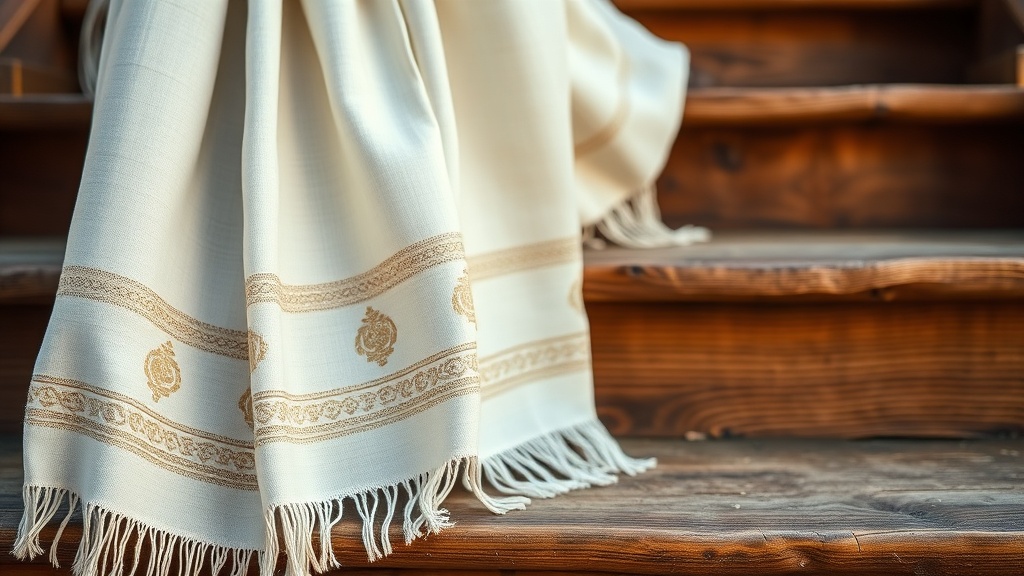
The material matters. Silk khatas, considered the most prestigious, come primarily from weavers in China, India, and Nepal. Cotton versions are more affordable and appear in everyday community exchanges. Synthetic fabric, usually polyester, is common in areas where cost is a barrier, though in monastic contexts, silk remains the standard for formal offerings. A high-quality silk khata has a particular luminous quality when draped: slightly translucent, catching light along its length in a way that makes the whiteness feel active rather than inert.
⭐ Worth knowing: choosing the right khata
For a first purchase, a white silk khata between 180 cm and 210 cm in length is correct for almost every situation. Check for a genuine woven fringe at both ends (not machine-cut), and look for faint Eight Auspicious Symbol motifs along the body of the scarf. These details indicate a scarf made for ritual use rather than a decorative replica.
Where the Tradition Comes From
The historical origins of the khata are debated, but most accounts place its introduction to Tibet somewhere between the 13th and 14th centuries, linked to trade and diplomatic contact with the Yuan Dynasty court of Kublai Khan. The Mongol custom of presenting white felt or silk to honor guests appears to have merged with existing Tibetan ritual exchange practices to produce the distinctive form we recognize today.
The 14th-century Tibetan historian Buton Rinchen Drub recorded early uses of offering scarves in monastic contexts. By the time of the Fifth Dalai Lama in the 17th century, the khata had become fully systematized as a ritual object with codified rules for presentation, color, and occasion. From Tibet, the practice traveled with Buddhism and trade routes to Mongolia, Bhutan, Ladakh, Sikkim, and among Tibetan diaspora communities worldwide.
💡 Did you know?
In Mongolia, the tradition is known as khadag, and blue scarves hold the highest ceremonial status, reflecting the sky-honoring symbolism of Tengriist heritage that blended with Tibetan Buddhist practice across the Mongolian steppe. White remains dominant in Tibetan and Bhutanese contexts, but the Mongolian blue khadag is considered equally, if not more, prestigious within its own cultural register.
Khata Colors and What They Represent
Most people outside the tradition encounter the white khata first, and white is by far the most common. But the full color range of ceremonial scarves reflects a rich symbolic system rooted in Vajrayana Buddhist iconography and Tibetan cosmological thinking.
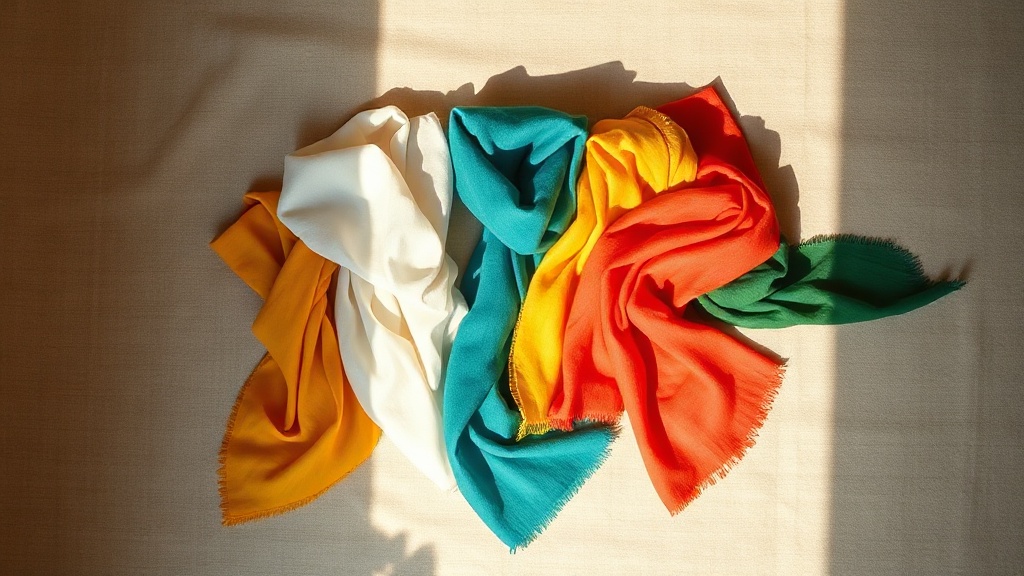
| Color | Primary Association | Typical Context |
|---|---|---|
| White | Purity, goodwill, auspiciousness | Universal use: greetings, offerings, funerals, temple visits |
| Yellow / Gold | Earth element, stability, the monastic sangha | Offerings to senior lamas and abbots; ceremonial presentations |
| Blue | Sky, space, the limitless; Mongolian prestige color | Highest honor in Mongolian Buddhist ceremony; diplomatic gifts |
| Green | Nature, vitality, Tara-related symbolism | Offerings associated with Tara practice; some regional greetings |
| Red | Protective energy; fire element | Protective deities; some tantric ritual contexts; rarely given person-to-person |
| Five-color (Lungta) | Five elements; Buddhas of the five directions | Special ceremonies; stupa offerings; New Year (Losar) events |
For most practitioners outside Tibet and Mongolia, white is the safe and correct choice in virtually every situation. Colored scarves require a level of contextual knowledge that comes from immersion in a specific regional tradition. If you are unsure, white is always appropriate.
Who Gives a Khata, and When
The occasions for presenting a Tibetan ceremonial scarf span the full arc of human life. A khata is placed around the neck of a newborn to welcome them. It drapes across a coffin or is offered at the cremation of a loved one. Travelers receive one before a long journey; returning travelers receive one upon arrival. Students offer one to their teacher at the start of a study relationship and again at its close.
In monastic settings, a khata placed at the base of a statue is an offering to the represented Buddha or bodhisattva, not a supplication for personal gain but an act of dana, the Pali and Sanskrit term for generosity that forms one of the foundations of Buddhist practice. The Sutta Pitaka describes dana as the first of the ten perfections (paramitas) that a practitioner cultivates on the path toward awakening. A khata offered before a shrine is dana made visible.
Political and diplomatic uses are also well established. The Dalai Lama traditionally greets visiting heads of state and religious leaders with a khata. Regional government officials in Tibet and Mongolia exchange them at the beginning of formal meetings. When the Panchen Lama or other high lamas travel, crowds line routes to offer white scarves as a gesture of respect.
⭐ When to bring a khata
- First visit to a Buddhist center: bring one to offer to the presiding teacher.
- Public teaching by a Tibetan lama: a white khata placed on the offering table at the front is standard practice.
- Losar (Tibetan New Year): khatas are exchanged between community members as greetings.
- Funeral of a Tibetan Buddhist practitioner: a khata draped over the portrait of the deceased is a common gesture of farewell.
- Welcoming a traveler: presenting a khata on arrival acknowledges a safe return and expresses joy.

The Correct Way to Offer a Khata
Etiquette around the khata offering is specific, and the details carry real weight. Getting them right is a form of respect; getting them wrong does not cause offense in most modern contexts, but it does show unfamiliarity with the tradition.
- Use both hands. Present the scarf with both hands extended together, never with one hand alone, which reads as casual or dismissive in most Asian Buddhist etiquette systems.
- Fold it correctly. The khata should be folded lengthwise and then in thirds, so it forms a neat rectangular bundle. The open end (the end that will unfold when the recipient takes it) should face toward the recipient, not toward you.
- Bow slightly as you offer it. The depth of the bow varies by context. To a lama or high rinpoche, a deeper bow or even a prostration may be appropriate. To a peer, a gentle forward incline of the head is sufficient.
- Do not drape it yourself unless invited. If you are presenting to a person of equal or similar standing, you hand the folded scarf over and they receive it. If you are presenting to a lama, they may choose to place it around your neck according to Tibetan tradition. Do not reach over and drape it around their neck uninvited.
- For statues and shrines, drape the khata around the statue's neck or lay it at the base of the altar with a brief moment of recollection or prayer. Do not toss it or drop it carelessly.
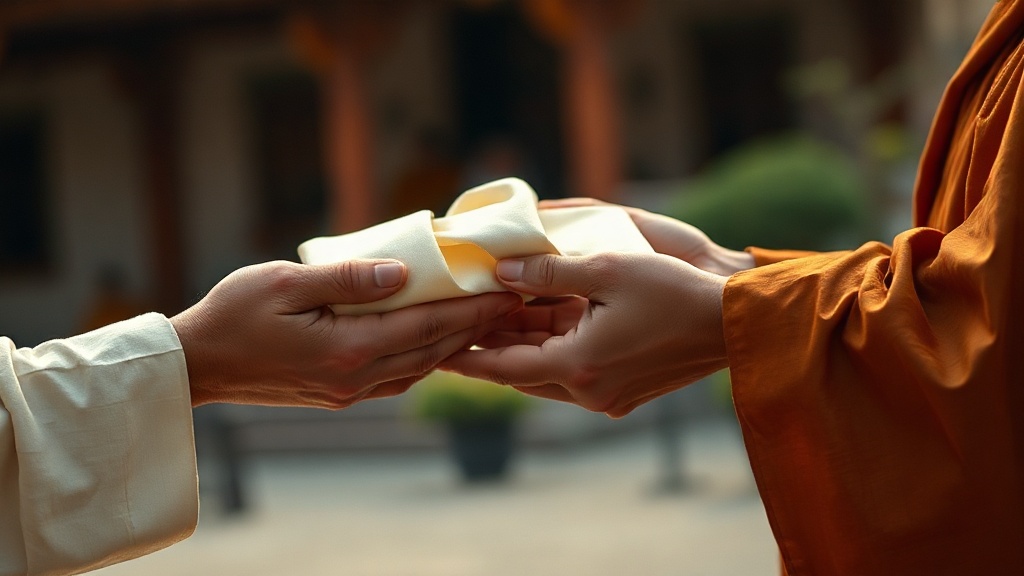
The gesture of receiving a khata also carries etiquette. Take it with both hands, bow slightly, and keep it for some time before setting it aside. Folding it and immediately putting it in a bag while still in front of the giver communicates indifference. If you receive a khata at a teaching or ceremony, holding it across your forearms for a few minutes during the proceedings is the natural thing to do.
💡 Did you know?
In large public teachings by the Dalai Lama, organizers often pre-fold thousands of khatas and distribute them at the entrance so that every attendee can participate in the communal offering. At the end of the event, the stage can be blanketed in white, a striking visual expression of collective dana. This practice has been observed at venues from Bodh Gaya in India to Madison Square Garden in New York.
Regional Variations Across the Himalayan Buddhist World
Tibet, Bhutan, Mongolia, Ladakh, Sikkim, and the Tibetan diaspora communities of India, Nepal, and the West each carry the khata tradition with slight but meaningful differences.
In Bhutan, the equivalent scarf is called a khadar, and its use is embedded in a highly formalized system of court and official etiquette. Bhutanese driglam namzha (the national code of etiquette) specifies exactly who may present or receive a khadar under what circumstances. The scarves used in Bhutanese official settings often incorporate fine silk with more ornate woven patterns than the plain Tibetan white.
In Ladakh and Sikkim, practice closely follows Tibetan norms, with white dominating everyday exchange. Among the Sherpa communities of Nepal, khatas appear at nearly every social milestone: weddings, deaths, departures, returns. The Sherpa practice of layering multiple khatas around the neck of a honored guest can produce a comically tall stack of silk by the end of a formal reception, a visible accumulation of good wishes.
Among Buryat Mongolians in Russia and Mongolians in Inner Mongolia, the blue khadag takes precedence. Sky-blue silk, associated in Mongolian cosmology with the eternal blue sky (Möngke Tenggeri), carries a prestige that white does not in those communities. A blue khadag presented by a Buryat elder to a guest is a high honor with roots that predate Buddhism's arrival on the steppe.
💡 Did you know?
The Nepali word for the ceremonial offering scarf is kata, a direct phonetic borrowing from Tibetan. In Nepal, kata scarves are used not only in Buddhist contexts but also in some Hindu ceremony, particularly among communities living in areas where Tibetan and Hindu cultural practices have overlapped for centuries along trade routes through the Himalayas.
Khata Scarves as Gifts for Western Practitioners and Gift-Givers
A growing number of people outside the Himalayan Buddhist world purchase khatas as personal gifts, decorative objects, or items to bring when visiting a Tibetan Buddhist center. This is a meaningful choice, and a few practical points are worth knowing.
For gifting purposes, a white silk khata of standard length (around 180 to 210 cm) suits almost every occasion. The Eight Auspicious Symbols woven or printed along the body of the scarf add symbolic richness without overcomplicating the gesture. If you are giving a khata to a practitioner who will use it at a shrine or in formal community practice, silk is preferable to polyester; the texture and drape of real silk hold a quality of care that the recipient will notice.
A khata also works well as a decorative piece in a dedicated meditation space, draped across an altar frame, hung behind a statue of the Buddha, or laid beneath a ritual bell and dorje. In that setting, the scarf functions less as a social offering and more as a statement of intention within a personal practice environment.

The Symbolism Behind the Fabric: What the Khata Communicates
The khata is not merely polite. It operates as a language, communicating several distinct things simultaneously through a single physical gesture.
First, it expresses zangpo tashi, a Tibetan phrase roughly translated as "auspicious goodness" or "good omen." The offering scarf says: I bring goodwill into this exchange. Whatever the occasion, joyful or sorrowful, that baseline message remains constant. At a funeral, a khata does not deny grief; it says that good intention and care cross the boundary of loss.
Second, the act of offering a material object externalizes generosity. Dana as a practice is not only mental; it requires the physical release of something held. Even a lightweight scarf, given sincerely, involves a moment of letting go. That moment has weight in a tradition where attachment is understood as one of the roots of suffering.
Third, the white offering scarf reflects purity of motivation in the giver. The Tibetan word dag pa (purity, clarity) is embedded in the symbolism of the white color itself. White in Tibetan symbolism is not the absence of color but the presence of clarity; it is the color associated with Vairochana, the central Buddha of the five-buddha mandala, whose wisdom is called the Dharmadhatu wisdom, the awareness that perceives the nature of reality without distortion.
"Whatever is offered with a pure mind, even if it is just a handful of flowers, becomes a great offering."
Paraphrase drawn from the spirit of dana teachings in the Theravada Anguttara Nikaya, a recurring theme across traditions
⭐ The Five Buddha Families and khata color
In Vajrayana iconography, each of the five Buddhas (Vairochana, Akshobhya, Ratnasambhava, Amitabha, Amoghasiddhi) corresponds to a color, a direction, an element, and a wisdom. According to Tibetan Buddhist tradition, the white khata aligns with Vairochana at the center, the all-encompassing Dharmadhatu wisdom. This layered symbolism is why even a plain white scarf, in the Tibetan Buddhist view, is never merely decorative.
Caring for a Khata You Have Received
If someone has given you a khata, a few practical points apply. Do not discard it casually. Even a synthetic khata given at a community event carries the intention of the person who presented it. In Tibetan households, received khatas accumulate; they are often stored on a shelf, draped over altar items, or eventually recycled into other ritual contexts rather than simply thrown away.
A soiled silk khata can be gently hand-washed in cool water with a mild, unscented soap, then laid flat to dry away from direct sunlight. Silk is sensitive to heat; never tumble-dry or iron directly on high heat. A cool iron through a damp cloth, or light steaming, will remove creases without damaging the fiber.
Khata in the Contemporary Tibetan Diaspora
Since 1959, when the Tibetan government-in-exile established itself in Dharamsala, India, the khata tradition has traveled with the diaspora to dozens of countries. In Tibetan communities in Toronto, New York, Zurich, and Melbourne, khatas appear at community Losar (New Year) celebrations, at the welcome ceremonies for visiting teachers, at graduation events at Tibetan schools, and at the funerals of community elders.
The scarf has also entered the broader Western Buddhist community as dharma centers of all traditions, including Zen, Vipassana, and non-Tibetan schools, have adopted the practice when hosting Tibetan teachers. It is now common to see khatas offered at the Dalai Lama's public teachings in Western cities, with thousands of scarves filling the space in a visible expression of communal goodwill.
Online platforms have made khata scarves readily available outside Asia, which has widened their reach considerably. This accessibility is largely positive; more practitioners can participate in the tradition. The one caution worth noting is quality: a very cheap synthetic khata with no woven symbols, sold purely as a novelty, carries little of the craft that makes a proper silk khata meaningful. When choosing one for a significant offering or gift, the material and weave are worth attending to.
A Small Object, a Large Practice
The khata scarf asks very little of you. Hold it in both hands. Bow. Offer it. That is the whole of the gesture. But behind that simplicity sits centuries of considered thought about what generosity actually means, what purity of intention looks like when given material form, and how a community of practitioners maintains its cohesion across births, deaths, arrivals, and farewells. A white length of silk, offered with full attention, is one of the clearest expressions of Buddhist dana practice you can perform outside a meditation cushion. That is what makes it worth understanding properly, and worth doing well.
If you are new to Tibetan Buddhist practice, bringing a carefully chosen ceremonial object to your first teaching or community gathering is a natural way to express sincerity without words. If you are a longer-term practitioner, revisiting the gesture of the khata offering with fresh attention can restore something to a practice that has grown routine. The scarf itself does not change. What we bring to it can.
Frequently Asked Questions
What is the significance of the khata scarf?+
A khata scarf is a ceremonial offering used across Tibetan, Mongolian, Bhutanese, and Nepali Buddhist traditions to express goodwill, respect, and auspiciousness. It functions as a physical expression of dana (generosity) and marks significant life events, greetings, and offerings to religious figures and statues. According to Tibetan Buddhist tradition, white scarves represent purity of intention; colored variants carry additional symbolic registers tied to Buddhist iconography and regional customs.
What do the different colors of khata mean?+
White khatas represent purity and are suitable for any occasion. Yellow or gold scarves are associated with the monastic Sangha and earth symbolism, commonly offered to senior lamas. Blue scarves hold the highest status in Mongolian Buddhist practice, linked to sky symbolism in the Tengriist tradition. Green scarves appear in rituals associated with Tara, and red with protective deities. Five-color khatas represent the five elements and the Buddhas of the five directions, used in special ceremonies. For most practitioners outside these traditions, white is always appropriate.
How do you correctly offer a khata scarf?+
Fold the scarf lengthwise and into thirds so it forms a neat rectangle, with the open end facing toward the recipient. Present it with both hands, accompanied by a slight bow. The depth of the bow increases with the seniority of the person receiving the scarf. Do not drape it over someone's neck unless that is customary for the context; in most peer-to-peer exchanges, you hand it over and they receive it. For statue offerings, drape the scarf gently around the neck of the figure or lay it at the base of the altar.
What is the Nepali or Bhutanese word for the ceremonial scarf?+
In Nepal, the ceremonial scarf is called a kata, borrowed directly from the Tibetan. In Bhutan, the equivalent is khadar, and its use is governed by the national etiquette code known as driglam namzha. In Mongolia and Buryatia, the term is khadag. All four words refer to the same essential object: a long silk or cotton ceremonial scarf offered as a mark of respect and goodwill, with regional differences in color preference and presentation etiquette.
What material should a khata be made from?+
Traditional khatas are made from silk, considered the most appropriate material for formal and monastic offerings. Cotton versions are widely used for everyday community exchanges and are perfectly respectful. Polyester or synthetic khatas are common where cost is a barrier, but for significant offerings such as presenting to a teacher or placing at a major shrine, silk is preferred. Look for scarves with woven auspicious symbols rather than plain fabric, and check that the fringe at each end is properly formed rather than machine-cut.
What should I do with a khata I have received?+
Do not discard a received khata casually. In Tibetan households, received scarves accumulate and are often stored on a shelf, draped over altar items, or eventually recycled into other ritual contexts. A soiled silk khata can be gently hand-washed in cool water and laid flat to dry. When a khata is too worn for continued use, the Tibetan tradition recommends bringing it to a monastery for ceremonial burning rather than placing it in general waste. If no center is available, burning it cleanly at home with a moment of gratitude is the appropriate alternative.


